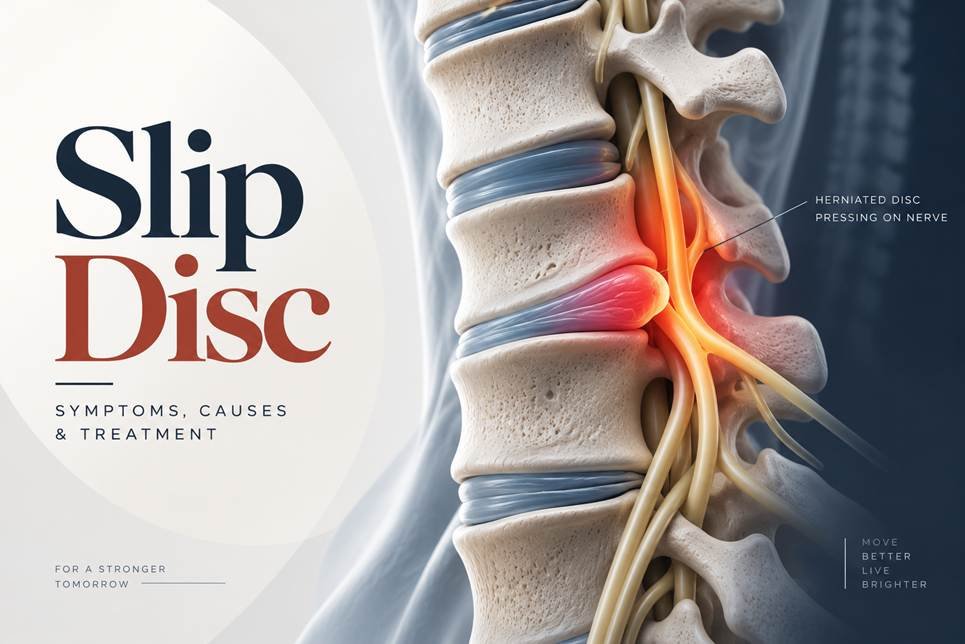
A slip disc is a common spinal condition that can cause back pain, numbness, tingling or weakness when a damaged disc presses on a nearby nerve. Although the term “slip disc” is commonly used, the medical term is usually herniated disc or disc herniation. A slip disc can occur anywhere along the spine, although it most commonly affects the lower back. Many people improve with non-surgical treatment, but certain symptoms require prompt medical attention.
What Is a Slip Disc?
Your spine is made up of individual bones called vertebrae. Between these bones are flexible discs that act as cushions and help the spine move smoothly. Each disc has a soft inner portion surrounded by a tougher outer layer.
A slip disc occurs when part of the soft inner material pushes through a tear or weakness in the outer layer. If the displaced material irritates or compresses a nearby nerve, it can cause pain and other neurological symptoms. A slipped disc may also be called a herniated or ruptured disc. Importantly, not every disc herniation causes symptoms. Some people may have a herniated disc visible on an imaging scan without experiencing pain.
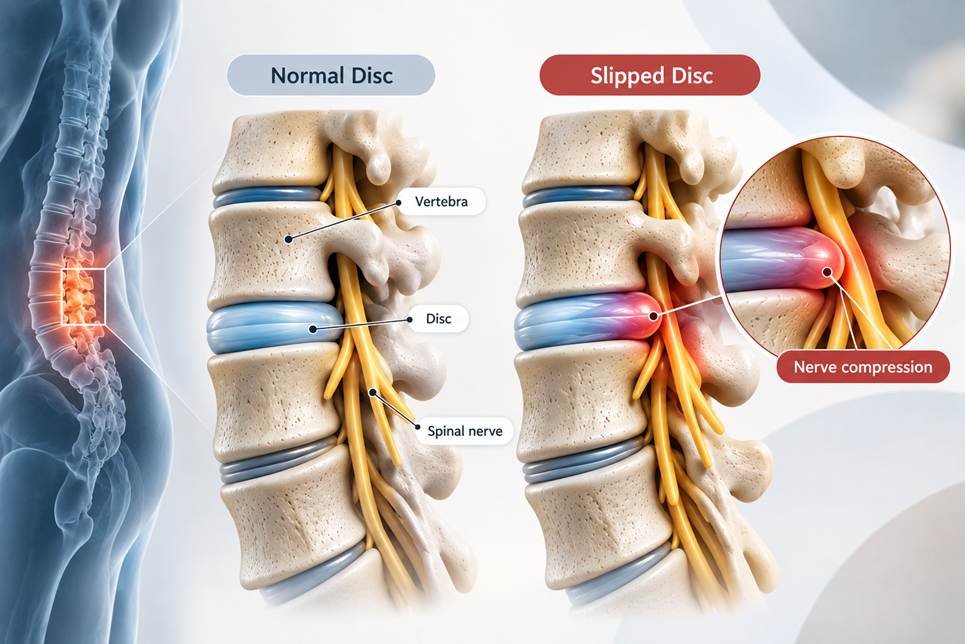
Normal disc compared with a herniated/slipped disc and nerve compression.
What Are the Symptoms of a Slip Disc?
Slip disc symptoms largely depend on the disc’s location and the nerve affected. Common symptoms include:
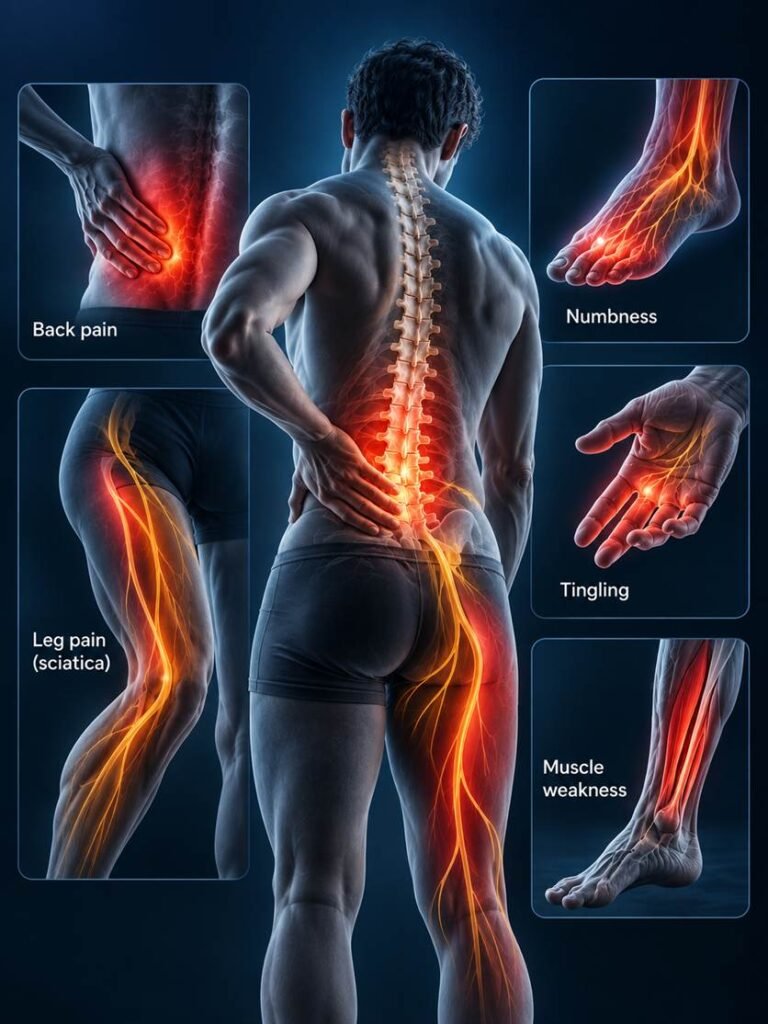
Back or neck pain:
A herniated disc in the lower back may cause pain in the lower back, buttocks, hip or leg. A disc problem in the neck may cause pain extending into the shoulder, arm or hand. The pain can be sharp, burning or shooting and may worsen with coughing, sneezing or certain movements.
Numbness and tingling:
Nerve irritation can cause pins-and-needles sensations, tingling or reduced sensation. These symptoms may travel along the path of the affected nerve.
Muscle weakness:
A compressed nerve can affect the muscles it supplies, causing difficulty lifting the foot, walking steadily, gripping objects or performing certain movements. New or worsening weakness should be medically evaluated.
Leg pain or sciatica:
A lower-back slip disc can irritate a nerve root that contributes to the sciatic nerve, producing pain that travels from the lower back or buttock into the leg. This is commonly called sciatica.
What Causes a Slip Disc?
- Age-related disc wear: As we age, spinal discs gradually lose some flexibility and can become more vulnerable to tears. A disc may herniate during an ordinary movement such as bending or twisting.
- Heavy lifting: Lifting heavy objects incorrectly, particularly while twisting or using the back rather than the legs, can place considerable stress on the spine.
- Prolonged sitting and inactivity: Long periods of sitting and limited physical activity may contribute to poor spinal mechanics and reduced conditioning.
- Excess weight: Carrying excess body weight can increase mechanical stress on the spine, particularly the lower back.
- Smoking: Smoking can affect disc health and is associated with faster degeneration of spinal discs.
How Is a Slip Disc Diagnosed?
A doctor usually begins with a medical history and physical examination. The examination may include checking muscle strength, reflexes, sensation, walking and specific movements to determine whether a spinal nerve is being affected.
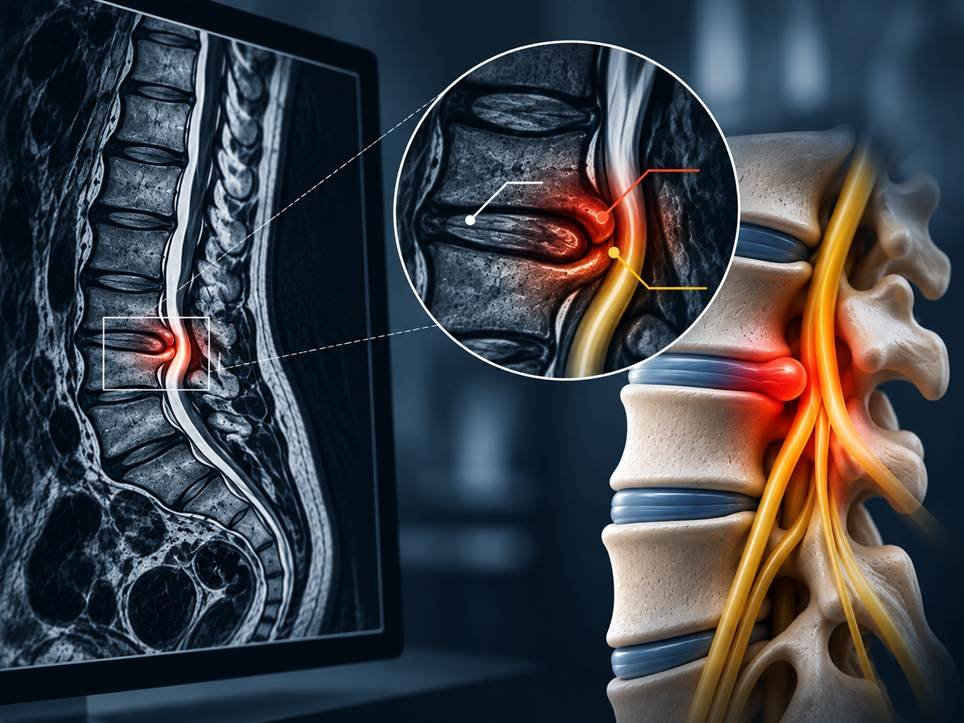
MRI and anatomical visualization can help identify a herniated disc and its relationship to nearby nerves.
MRI Scan
An MRI of the spine provides detailed images of the discs, spinal canal and nerves. It can help identify the location of a herniated disc and whether it is compressing a nerve. X-rays cannot directly show a herniated disc, but they may help rule out other causes of back pain. CT scans may be used in selected situations.
What Is the Treatment for a Slip Disc?
Most people with a slip disc do not require surgery. Treatment depends on the severity of symptoms, neurological findings and how the condition responds over time.
Medicines and activity modification:
Pain-relieving or anti-inflammatory medicines may be recommended depending on the person’s symptoms and medical history. Short periods of relative rest can be useful when pain is severe, but prolonged bed rest is generally not recommended. Gradually returning to comfortable activity can support recovery.
Physiotherapy and exercises:
A physiotherapist can recommend exercises based on the individual’s symptoms and examination. These may improve mobility and strengthen muscles supporting the spine. Exercises that worsen pain, numbness or weakness should not be continued without professional advice.
Steroid injections:
For some people with persistent nerve-related pain, a corticosteroid injection near the affected nerve may help reduce inflammation and pain.
Slip disc surgery:
Surgery may be considered when symptoms do not improve with appropriate non-surgical treatment or when there is significant or progressive neurological impairment. A procedure such as discectomy may remove the portion of the disc pressing on a nerve.
When Should You See a Doctor for a Slip Disc?
You should consult a doctor if back or neck pain is accompanied by persistent numbness or tingling, pain traveling into an arm or leg, muscle weakness, difficulty walking, or symptoms that continue or worsen despite initial treatment.
Seek emergency medical care if you develop numbness around the buttocks or genital area, difficulty passing urine, loss of bladder or bowel control, or significant or rapidly worsening weakness in the legs. These symptoms can indicate cauda equina syndrome, a rare but serious condition caused by compression of nerves in the lower spine.
Can a Slip Disc Be Prevented?
Not every slip disc can be prevented, but healthy habits may reduce the risk of spinal disc problems.
- Stay physically active.
- Maintain a healthy body weight.
- Strengthen your core and back muscles appropriately.
- Use your legs rather than your back when lifting.
- Avoid twisting while carrying heavy objects.
- Take regular movement breaks if you sit for long periods.
- Avoid smoking.
Frequently Asked Questions About Slip Disc
Can a slip disc heal without surgery?
Yes. Many people improve with conservative treatment, including appropriate activity, medication and physiotherapy. Surgery is not required in most cases.
Is walking good for a slip disc?
Gentle walking is generally encouraged when it does not worsen symptoms. Prolonged bed rest is usually not recommended, although activity should be adjusted according to the individual’s symptoms and medical advice.
Is every slip disc painful?
No. Some people have a herniated disc without symptoms. Symptoms generally occur when the disc irritates or compresses nearby nerves.
When does a slip disc require surgery?
Surgery may be considered when significant symptoms persist despite appropriate non-surgical treatment, or when there is significant or progressive weakness, difficulty walking or serious nerve compression. Emergency treatment may be required when bladder or bowel dysfunction occurs with cauda equina syndrome.
Conclusion
A slip disc does not automatically mean surgery. Many people recover with appropriate non-surgical treatment and a gradual return to activity. However, persistent pain, numbness, weakness or radiating symptoms should not simply be ignored. Medical evaluation can help identify the source of symptoms and determine whether medication, physiotherapy, further investigation or surgical treatment is appropriate. If you are experiencing persistent back or neck pain with neurological symptoms, consult a qualified spine specialist for an individual assessment.
If you’re experiencing persistent back or neck pain with these symptoms, book a consultation with Dr. Neha Rai.
References
1. Mayo Clinic. Herniated disk: Symptoms and causes. https://www.mayoclinic.org/diseases-conditions/herniated-disk/symptoms-causes/syc-20354095
2. Mayo Clinic. Herniated disk: Diagnosis and treatment. https://www.mayoclinic.org/diseases-conditions/herniated-disk/diagnosis-treatment/drc-20354101
3. American Association of Neurological Surgeons. Herniated Disc. https://www.aans.org/patients/conditions-treatments/herniated-disc/
4. NHS. Slipped disc. https://www.nhs.uk/conditions/slipped-disc/
5. Max Healthcare. Slip Disc: Exploring Types, Risk Factors, and Progressive Treatment. https://www.maxhealthcare.in/blogs/all-about-slip-disc-disease/