
Brain tumor symptoms can be easy to miss, because a headache, occasional dizziness or tiredness is usually not caused by a tumor. However, when symptoms are new, persistent, progressively worsening, or accompanied by neurological changes such as seizures, weakness, vision problems or difficulty speaking, they should not be ignored.
Brain tumor symptoms can vary significantly from one person to another. They depend on factors such as the tumor’s size, location and growth rate, as well as how it affects the surrounding brain tissue. Some symptoms may develop gradually, while others, such as a seizure, may appear suddenly.
In this guide, Dr. Neha Rai explains the early signs of a Brain Tumor, how symptoms change with tumor location, when to see a doctor, and how brain tumors are diagnosed.
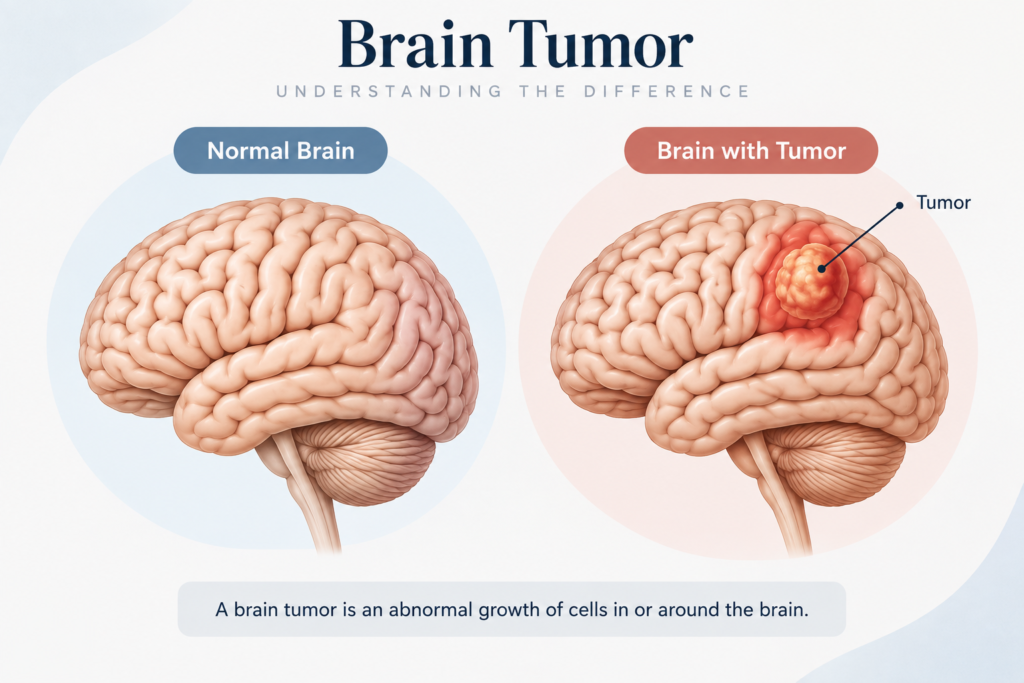
Illustration comparing a normal brain with a brain affected by a tumor.
What Is a Brain Tumor?
A brain tumor is an abnormal growth of cells in or around the brain. Brain tumors may be benign, meaning they are not cancerous, or malignant, meaning they are cancerous. Some tumors begin in the brain itself(primary Brain Tumors), while others spread to the brain from another part of the body(metastatic or secondary Brain Tumors).
Even a benign brain tumor can sometimes cause significant symptoms. This is because the brain is enclosed within the skull, and a tumor can press on nearby brain tissue, nerves or other important structures. The symptoms of a brain tumor therefore depend greatly on where the tumor is located and how it affects the brain.
What Are the Early Signs and Common Symptoms of a Brain Tumor?
There is no single set of symptoms that occurs in every person with a brain tumor. Some people may experience several symptoms, while others may have only one or two.
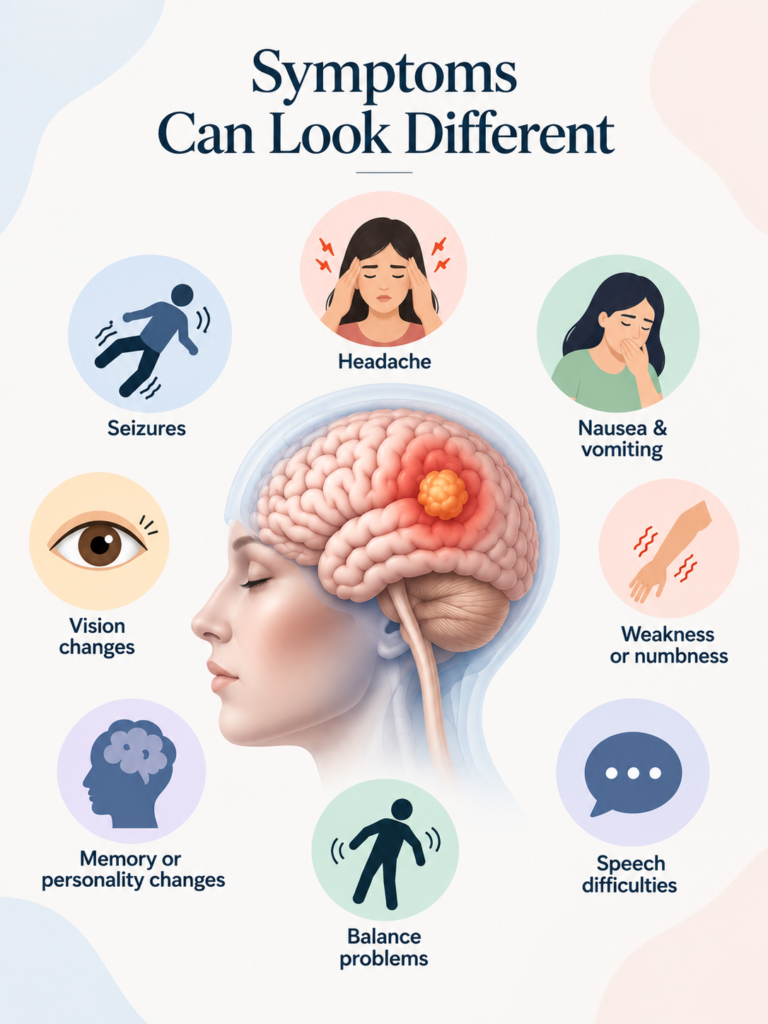
Common symptoms that may occur with brain
Brain Tumor Headaches
Headache is one of the symptoms that can occur with a brain tumor, but most headaches are not caused by brain tumors. A headache associated with a brain tumor may become progressively more frequent or severe. Some people may notice headaches that are worse in the morning, wake them from sleep, or become more uncomfortable with coughing or straining. A change in an established headache pattern, particularly when accompanied by other neurological symptoms, deserves medical attention.
Nausea and Vomiting
Nausea or vomiting can occur when a brain tumor contributes to increased pressure inside the skull. These symptoms are also extremely common with many other conditions. Persistent or unexplained vomiting, particularly when accompanied by headaches, vision changes or other neurological symptoms, should be evaluated by a healthcare professional.
Brain Tumor Seizures
A seizure can sometimes be the first noticeable sign of a brain tumor. Seizures can occur when abnormal electrical activity develops in brain tissue affected by the tumor. The type of seizure can vary depending on the area of the brain involved.
Having a seizure does not automatically mean that a person has a brain tumor because seizures have many possible causes. However, a first-time seizure requires prompt medical evaluation.
Vision Problems
A brain tumor can affect vision depending on its location and the structures it affects. Possible visual symptoms include blurred or double vision, loss of part of the visual field, and other changes in vision. New or unexplained changes in vision should be assessed rather than assumed to be caused by an ordinary eye problem.
Weakness or Numbness
A tumor affecting areas of the brain responsible for movement or sensation may cause weakness or numbness. These symptoms may affect one side of the body, such as an arm, leg or part of the face. Sudden weakness or numbness can also be a sign of a medical emergency such as a stroke and should not be assumed to be a brain tumor.
Speech, Memory or Personality Changes
Changes in brain function can sometimes become noticeable through changes in everyday behavior or abilities. Depending on the location of a tumor, a person may experience difficulty speaking or understanding language, memory problems, confusion, difficulty concentrating, or changes in personality or behavior. Sometimes these changes are noticed by family members before the person experiencing them recognizes that something has changed.
Balance and Coordination Problems
Problems with balance, coordination or walking can occur when a tumor affects areas of the brain involved in movement and coordination. A person may feel unusually unsteady, have difficulty walking, experience dizziness or notice that everyday movements have become less coordinated. These symptoms have many possible causes, and their presence does not by itself mean that a brain tumor is present.
Do Brain Tumor Symptoms Depend on Tumor’s location?
Yes. The location of a brain tumor can have a major influence on the symptoms it causes. Different areas of the brain control different functions. For example, a tumor affecting areas involved in movement may cause weakness or coordination problems, while one affecting language-related regions may cause difficulty speaking or understanding words. Tumors affecting areas involved in vision or memory can produce different symptoms.
This is why two people with brain tumors can experience very different symptoms. The rate at which a tumor grows can also influence how symptoms develop. Some symptoms may appear gradually over time, while others can develop more quickly.
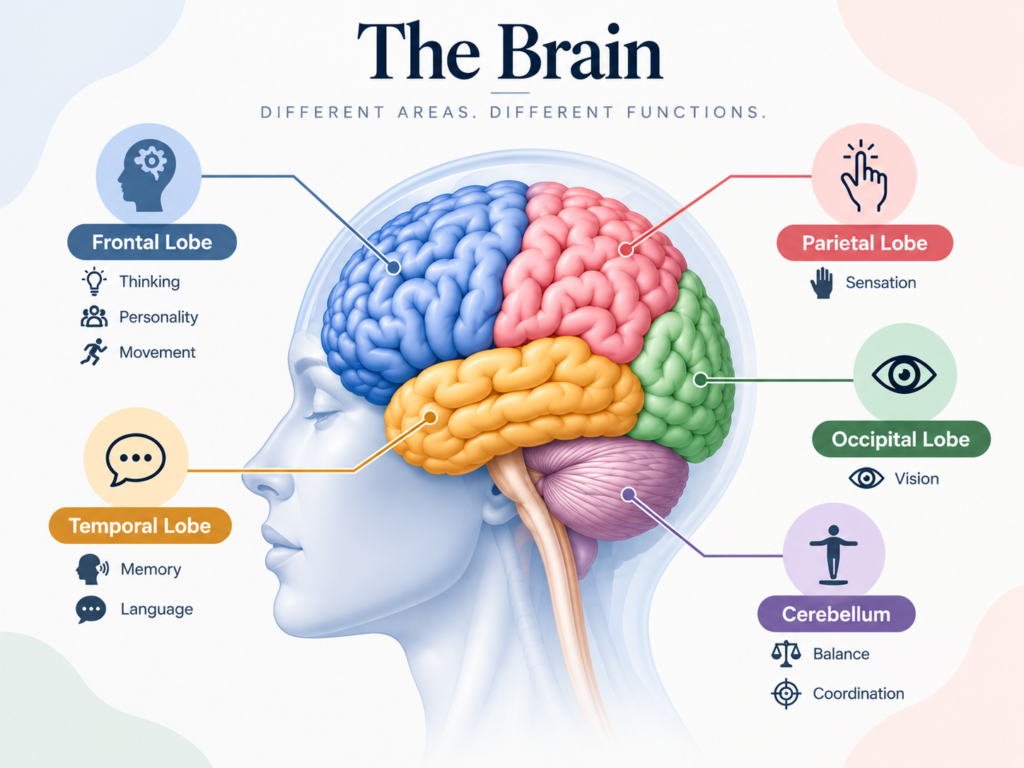
Different areas of the brain are associated with different functions.
When Should You See a Doctor?
Having a headache or occasional dizziness does not mean that you have a brain tumor. Many common conditions can cause these symptoms. However, medical evaluation is important when symptoms are
- new and unexplained,
- persistent or progressively worsening,
- associated with seizures,
- accompanied by weakness or numbness,
- associated with changes in vision,
- accompanied by speech or language difficulties,
- associated with significant memory or personality changes,
- or causing problems with balance or walking.
A first seizure, sudden weakness or numbness, sudden difficulty speaking, sudden vision loss, confusion, or a sudden severe headache requires urgent medical attention because these symptoms can also indicate other neurological emergencies.
How Are Brain Tumors Diagnosed?
Symptoms alone cannot confirm whether someone has a brain tumor. If a doctor suspects a neurological condition, the evaluation may begin with a detailed medical history and neurological examination. This may include assessment of vision, hearing, balance, coordination, strength, sensation and reflexes.
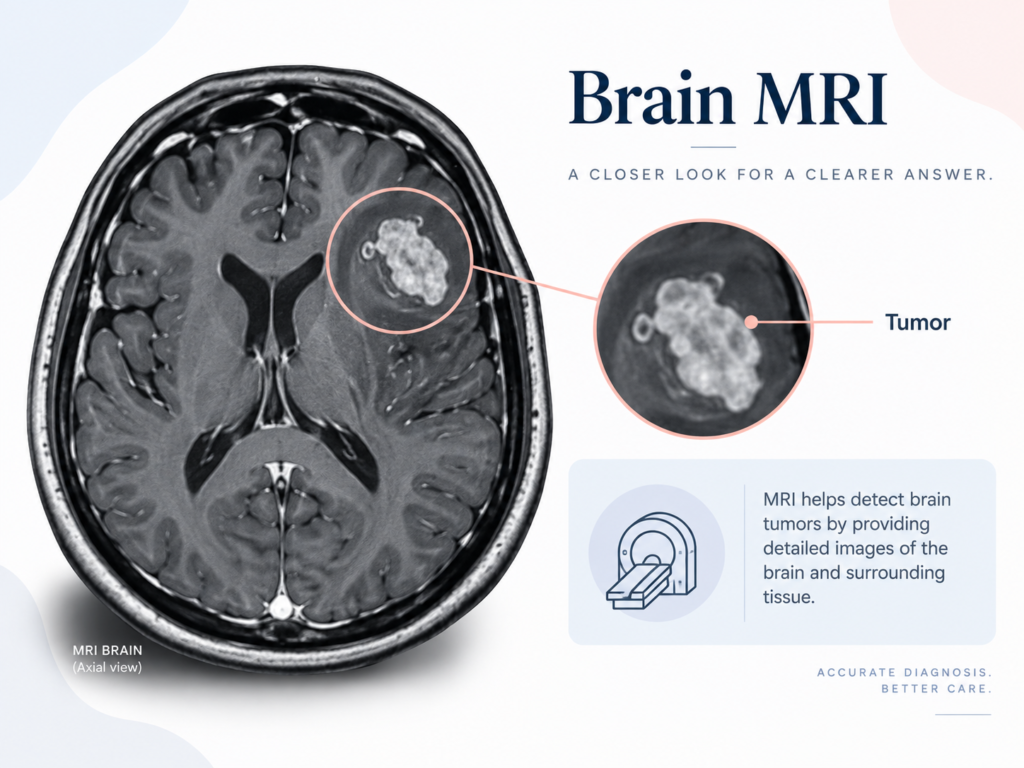
MRI can provide detailed images of the brain and help identify abnormalities.
MRI Brain
Magnetic resonance imaging (MRI) is commonly used to obtain detailed images of the brain and can help identify a brain tumor and understand its location and characteristics. In some situations, contrast material may be used to provide additional information.
CT Scan
A CT scan uses X-rays to create images of the brain. It can be particularly useful when rapid imaging is needed and may help identify abnormalities that require further investigation.
Biopsy and Tissue Testing
In some cases, a sample of the tumor may be examined in a laboratory to determine its type and other characteristics. The information obtained can help the medical team decide on the most appropriate treatment approach.
Not every person with symptoms suggestive of a brain tumor will need every test. The diagnostic approach depends on the individual’s symptoms, examination findings and imaging results.
Frequently Asked Questions About Brain Tumor Symptoms
Is a headache always a sign of a brain tumor?
No. Headaches are extremely common and usually have causes unrelated to brain tumors. However, a headache that is new, progressively worsening, unusually severe, or accompanied by neurological symptoms should be medically evaluated.
Can a seizure be the first sign of a brain tumor?
Yes, a seizure can sometimes be the first noticeable symptom of a brain tumor. However, seizures have many possible causes, so a first-time seizure requires appropriate medical evaluation rather than assuming that a tumor is responsible.
Are brain tumor symptoms the same in everyone?
No. Symptoms can vary depending on the tumor’s size, location and growth rate. Because different areas of the brain control different functions, tumors in different locations can produce very different symptoms.
When should I consult a neurosurgeon?
If imaging or clinical evaluation suggests the possibility of a brain tumor, a neurosurgical consultation may be recommended. A neurosurgeon can assess the location and characteristics of the lesion and discuss whether observation, further testing, surgery or another treatment approach may be appropriate. To discuss symptoms with Dr. Neha Rai , book a consultation.
Conclusion
Brain tumor symptoms can range from headaches and nausea to seizures, vision changes, weakness, speech difficulties, memory changes and problems with balance. However, these symptoms can also occur because of many other conditions, so experiencing one of them does not automatically mean that you have a brain tumor.
What matters is the pattern of symptoms: whether they are new, persistent, progressively worsening, or accompanied by other neurological changes. If you or someone you know is experiencing concerning neurological symptoms, timely medical evaluation can help identify the underlying cause and determine the appropriate next steps.
If you or a family member has symptoms that are new, persistent or worsening, don’t wait. Book a consultation with Dr. Neha Rai.
Disclaimer: This article is for information only and does not replace medical advice.
References
1. Mayo Clinic. Brain tumor: Symptoms and causes. Mayo Clinic. Updated October 15, 2025.
5. American Association of Neurological Surgeons. Brain Tumors. AANS. Patient information.
7. National Library of Medicine. Brain Tumors. MedlinePlus. U.S. National Library of Medicine.