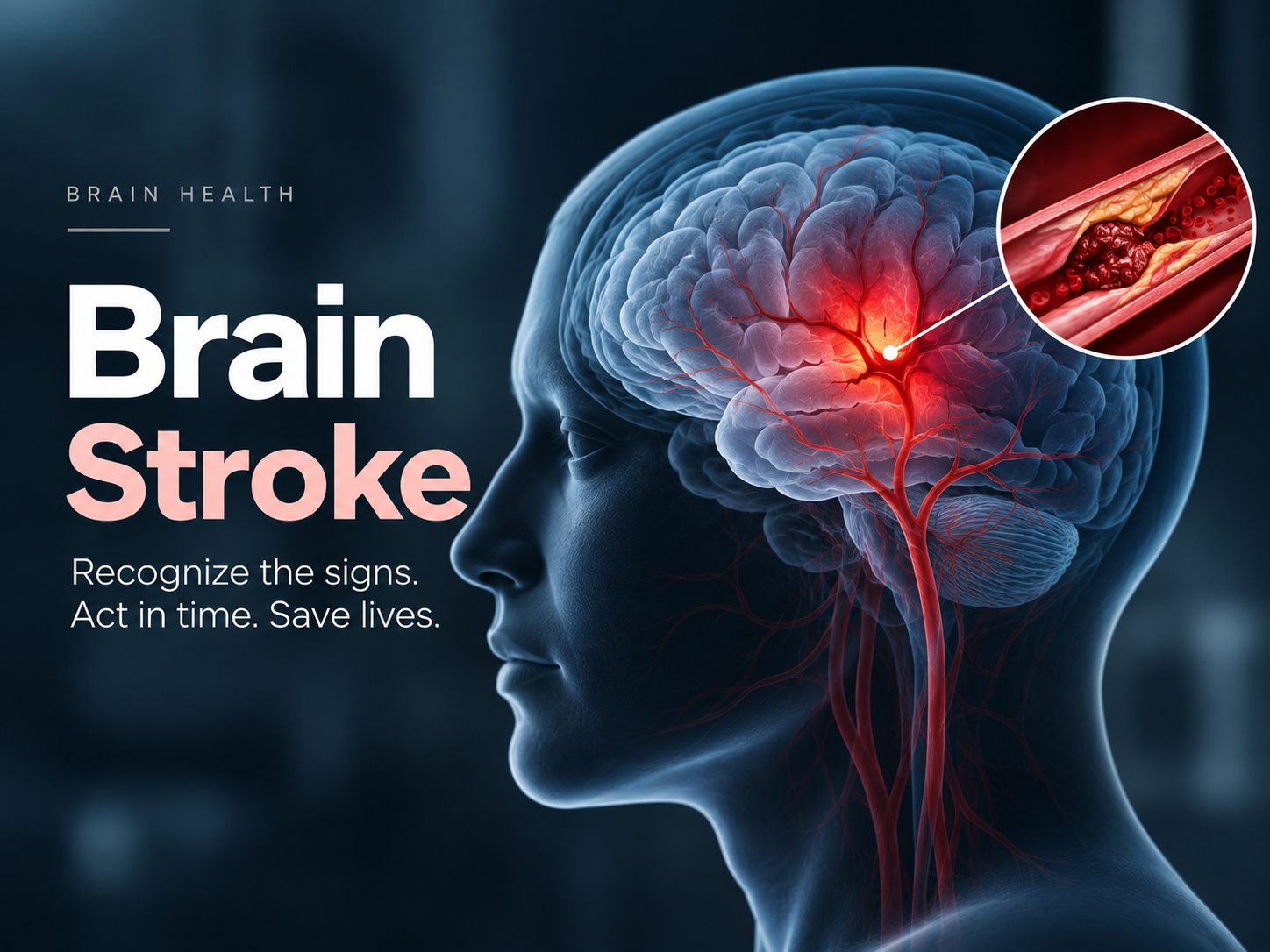
Brain stroke symptoms usually appear suddenly, because a stroke is a medical emergency that occurs when blood flow to part of the brain is blocked or a blood vessel in the brain ruptures.
Recognizing brain stroke symptoms early and seeking emergency medical care can make a significant difference in treatment and recovery. Sudden weakness, facial drooping, difficulty speaking, vision problems, dizziness or a severe unexplained headache should never be ignored.
What Is a Brain Stroke?
A stroke occurs when part of the brain suddenly stops receiving adequate blood supply or when bleeding occurs inside or around the brain. Without enough oxygen, brain cells begin to become damaged.
There are two main types of brain stroke:
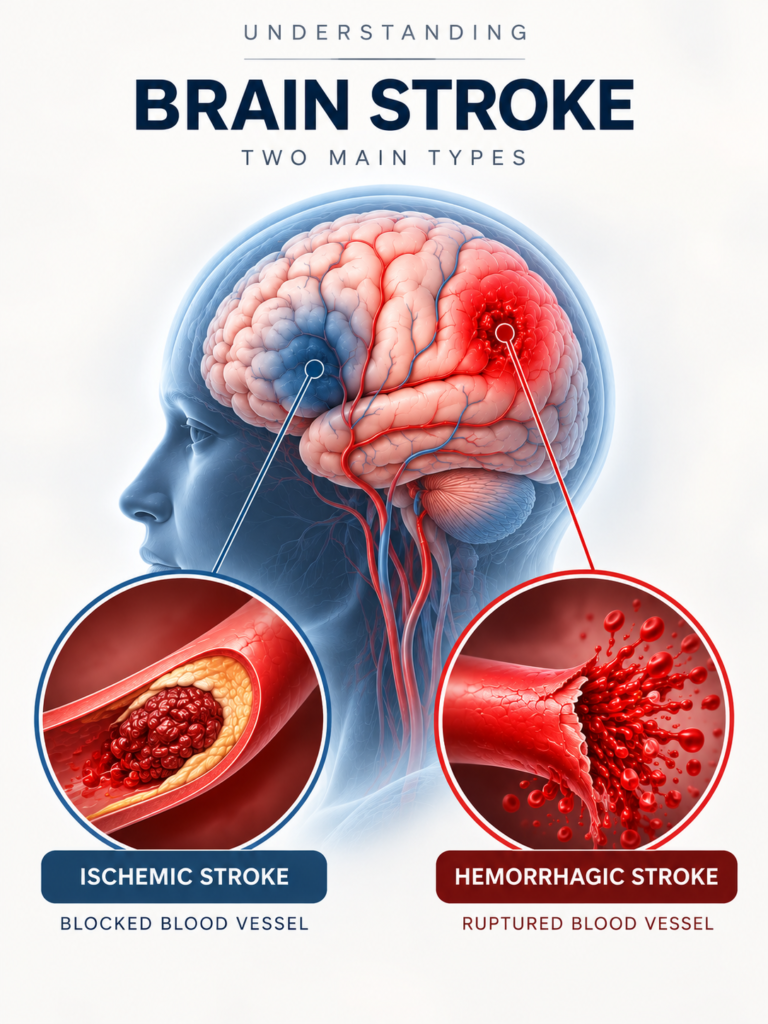
- Ischemic stroke: This occurs when a blood clot blocks an artery supplying the brain.
- Hemorrhagic stroke: This occurs when a blood vessel in the brain ruptures and causes bleeding.
The symptoms and treatment can vary depending on the type of stroke, the area of the brain affected and how quickly treatment begins.
What Are the Brain Stroke Symptoms?
Brain stroke symptoms usually appear suddenly. They can vary from person to person depending on which part of the brain is affected.
Sudden Weakness or Numbness
One of the most common brain stroke symptoms is sudden weakness or numbness, particularly affecting one side of the face, arm or leg. A person may suddenly find that one arm feels weak, a leg becomes difficult to move, or one side of the face appears different.
Facial Drooping
Ask the person to smile. If one side of the face droops or does not move normally, it may be a warning sign of stroke.
Difficulty Speaking or Understanding
A person having a stroke may suddenly have slurred speech, difficulty finding words, trouble understanding what others are saying or an inability to speak normally.
Sudden Vision Changes
Blurred or double vision, loss of vision in one or both eyes, or other sudden changes in eyesight can occur during a stroke.
Dizziness or Loss of Balance
Sudden dizziness, difficulty walking, loss of coordination or problems maintaining balance may also indicate a stroke, particularly when these symptoms develop abruptly.
Sudden Severe Headache
A sudden, severe headache with no obvious cause can be a warning sign, especially in some hemorrhagic strokes. It may occur with vomiting, dizziness, loss of consciousness or other neurological symptoms.
Early Signs of Stroke: How to Recognize a Stroke with BE FAST
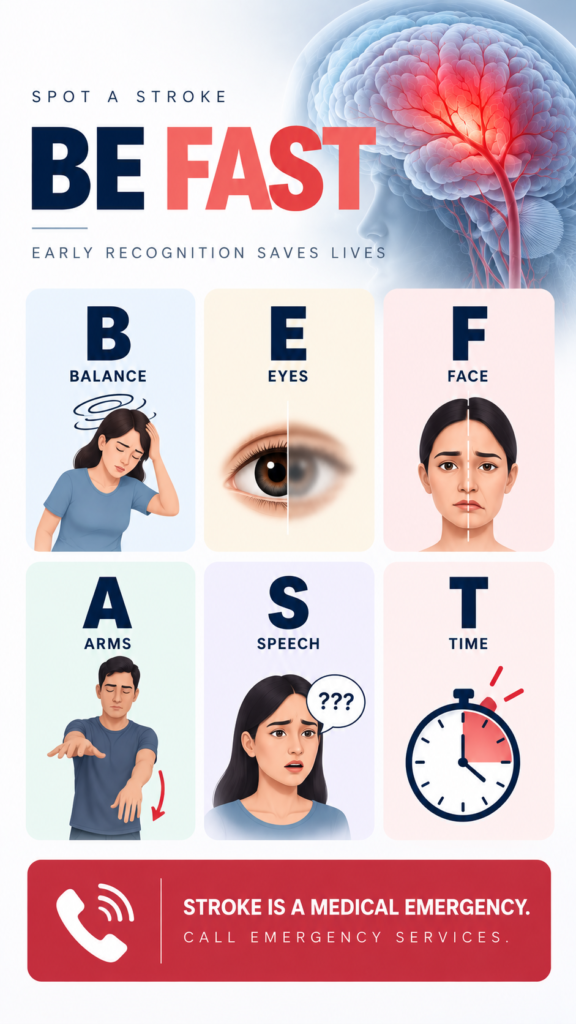
One useful way to recognize stroke warning signs is BE FAST:
- B – Balance: Sudden loss of balance, dizziness or difficulty walking
- E – Eyes: Sudden vision loss or changes in vision
- F – Face: One side of the face droops when smiling
- A – Arms: One arm becomes weak or drifts downward when both arms are raised
- S – Speech: Speech becomes slurred, confused or difficult to understand
- T – Time: Act immediately and seek emergency medical help
If any of these symptoms appear suddenly, do not wait to see if they improve. Note the time when the symptoms started and seek emergency care immediately. The time of symptom onset can help doctors determine which treatments may be appropriate.
BE FAST: a quick way to recognize stroke warning signs
What Causes a Brain Stroke?
The causes depend on the type of stroke.
Ischemic Stroke
An ischemic stroke occurs when a blood vessel supplying the brain becomes blocked, usually by a blood clot. Conditions that contribute to blood vessel narrowing or clot formation can increase the risk.
Hemorrhagic Stroke
A hemorrhagic stroke occurs when a blood vessel ruptures and causes bleeding in the brain. Long-standing or severely elevated blood pressure is an important risk factor. Other causes can include weakened blood vessels and certain vascular abnormalities.
What Are the Risk Factors for Stroke?
Several factors can increase the risk of having a brain stroke. Some can be controlled, while others cannot.
- High blood pressure
- Diabetes
- High cholesterol
- Smoking or tobacco use
- Certain heart conditions, including atrial fibrillation
- Physical inactivity
- Being overweight or obese
- Excessive alcohol consumption
- Increasing age
- Previous stroke or TIA
Managing conditions such as high blood pressure, diabetes and high cholesterol can help reduce stroke risk. Regular physical activity, avoiding tobacco and maintaining a healthy lifestyle are also important preventive measures.
What Is a TIA or Mini-Stroke?
A transient ischemic attack (TIA) happens when blood flow to part of the brain is temporarily interrupted. Its symptoms can resemble those of a stroke but may disappear after a short time.
It is important not to assume that temporary symptoms are harmless. A TIA can be a warning that a person is at increased risk of having a full stroke. Anyone who experiences sudden stroke-like symptoms, even if they disappear, should receive urgent medical evaluation.
What Should You Do If Someone Has Stroke Symptoms?
If you notice sudden symptoms of a brain stroke:
- Seek emergency medical help immediately.
- Note the exact time the symptoms started, or the last time the person was known to be well.
- Do not wait for the symptoms to disappear.
- Do not attempt to treat the person at home.
- Use emergency medical transport where available rather than driving the person yourself.
Fast assessment is important because some stroke treatments are time-sensitive. At the hospital, doctors need to determine whether the stroke is caused by a clot or bleeding before deciding on treatment.
How Is a Brain Stroke Diagnosed?
Doctors begin with the person’s symptoms, medical history and a neurological examination. Brain imaging is then used to identify what is happening inside the brain.
- CT scan: Often performed urgently to identify bleeding and other abnormalities.
- MRI: Can provide detailed images of the brain and help identify areas affected by stroke.
- Blood tests: May help assess factors that could influence treatment.
- ECG/EKG and other heart investigations: May be performed when a heart-related source of a blood clot is suspected.
The goal is to quickly determine the type, location and severity of the stroke so appropriate treatment can begin.
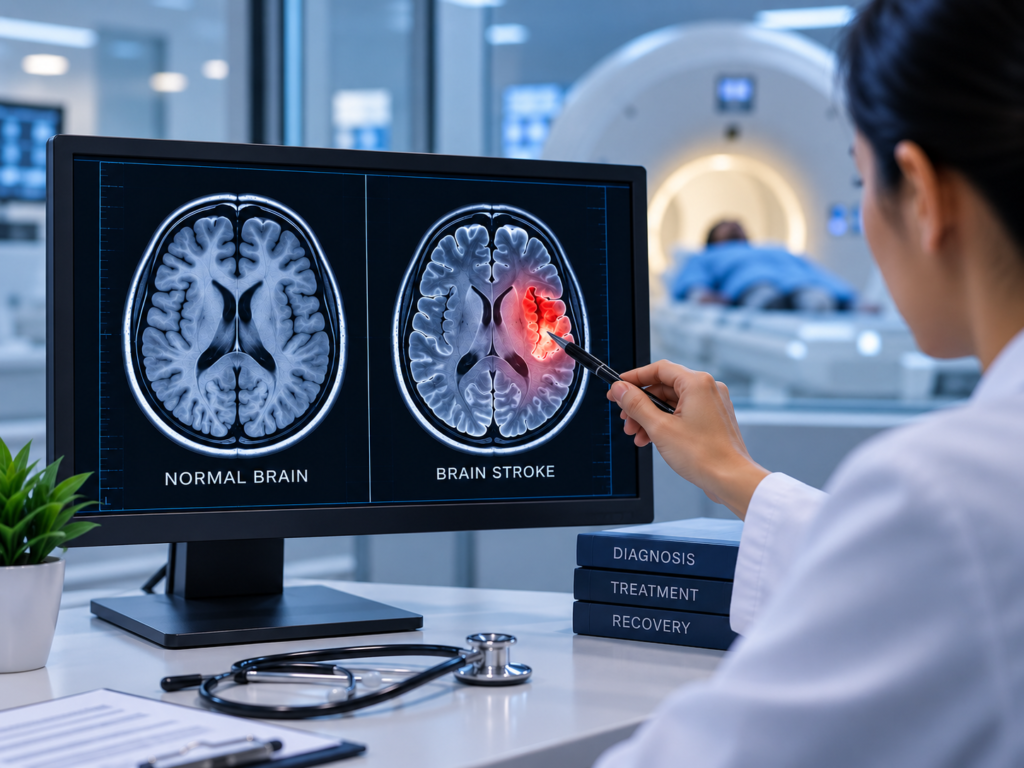
Brain imaging can help doctors identify stroke-related changes
How Is a Brain Stroke Treated?
Treatment depends primarily on whether the stroke is ischemic or hemorrhagic.
For an ischemic stroke, doctors may use clot-dissolving medication in eligible patients and, in selected cases, perform mechanical thrombectomy, a procedure that removes a clot from a blocked blood vessel.
For a hemorrhagic stroke, treatment focuses on controlling bleeding, managing pressure inside the skull and addressing the underlying cause. Some patients may require surgery or another procedure.
Because treatment options depend on the type of stroke and how much time has passed since symptoms began, early hospital evaluation is critical.
What Happens After a Stroke?
Stroke recovery varies considerably from one person to another. Some people recover quickly, while others may experience lasting difficulties with movement, speech, memory, swallowing or daily activities.
Rehabilitation can play an important role in recovery. Depending on the patient’s needs, it may include:
- Physiotherapy
- Speech and language therapy
- Occupational therapy
- Cognitive rehabilitation
The affected area of the brain, severity of the stroke, overall health and speed of treatment can all influence recovery.
Can a Brain Stroke Be Prevented?
Not every stroke can be prevented, but many risk factors can be managed.
- Keeping blood pressure under control
- Managing diabetes and cholesterol
- Staying physically active
- Maintaining a healthy weight
- Avoiding smoking and tobacco
- Following a balanced diet
- Managing heart conditions appropriately
- Attending regular medical check-ups
Prevention is particularly important for people who already have risk factors or have experienced a previous stroke or TIA.
Frequently Asked Questions About Brain Stroke Symptoms
What are the first signs of a brain stroke?
Sudden facial drooping, weakness or numbness on one side, difficulty speaking, vision changes, dizziness or loss of balance are common warning signs. A sudden severe headache can also occur, particularly with certain types of stroke.
Can a stroke happen without warning?
Yes. Stroke symptoms often develop suddenly, although some people may have previously experienced a TIA or have underlying risk factors without noticeable symptoms.
Can stroke symptoms disappear?
They can temporarily disappear during a TIA. However, this still requires urgent medical assessment because a TIA can be a warning sign of a future stroke.
Is a stroke completely treatable?
Recovery depends on several factors, including the type and severity of the stroke, the area of the brain affected and how quickly treatment begins. Early treatment can reduce the risk of permanent brain damage and disability.
When should I see a doctor for stroke symptoms?
Immediately. Stroke symptoms require emergency medical attention. Do not wait for them to improve on their own.
Conclusion
Knowing the brain stroke symptoms can help you recognize an emergency when every minute matters. Sudden weakness, facial drooping, speech difficulty, vision changes, balance problems or a severe unexplained headache should never be ignored.
Remember BE FAST, note when symptoms began and seek emergency medical care immediately. Early diagnosis and treatment can significantly influence the outcome after a stroke.
Medical References
1. Cleveland Clinic. Stroke: What It Is, Causes, Symptoms & Treatment. https://my.clevelandclinic.org/health/diseases/5601-stroke
2. Centers for Disease Control and Prevention. Signs and Symptoms of Stroke. https://www.cdc.gov/stroke/signs-symptoms/index.html
3. Centers for Disease Control and Prevention. Treatment and Intervention for Stroke. https://www.cdc.gov/stroke/treatment/index.html
4. American Stroke Association. Transient Ischemic Attack (TIA). https://www.stroke.org/en/about-stroke/types-of-stroke/tia-transient-ischemic-attack
5. American Stroke Association. Stroke, TIA and Warning Signs. https://www.stroke.org/en/help-and-support/resource-library/lets-talk-about-stroke/stroke-tia-and-warning-signs
Medical content note: This article is intended for general patient education and does not replace emergency medical evaluation or individualized medical advice.