
Pain that starts in the lower back and travels down the buttock and leg can be more than ordinary back pain. It may be sciatica, a condition caused by irritation or compression of the sciatic nerve or the nerve roots that form it.
Sciatica can cause pain, tingling, numbness or weakness, usually affecting one side of the body. A herniated disc is one of the most common causes. Most people improve with non-surgical treatment, but certain symptoms require urgent medical attention.
What Is Sciatica?
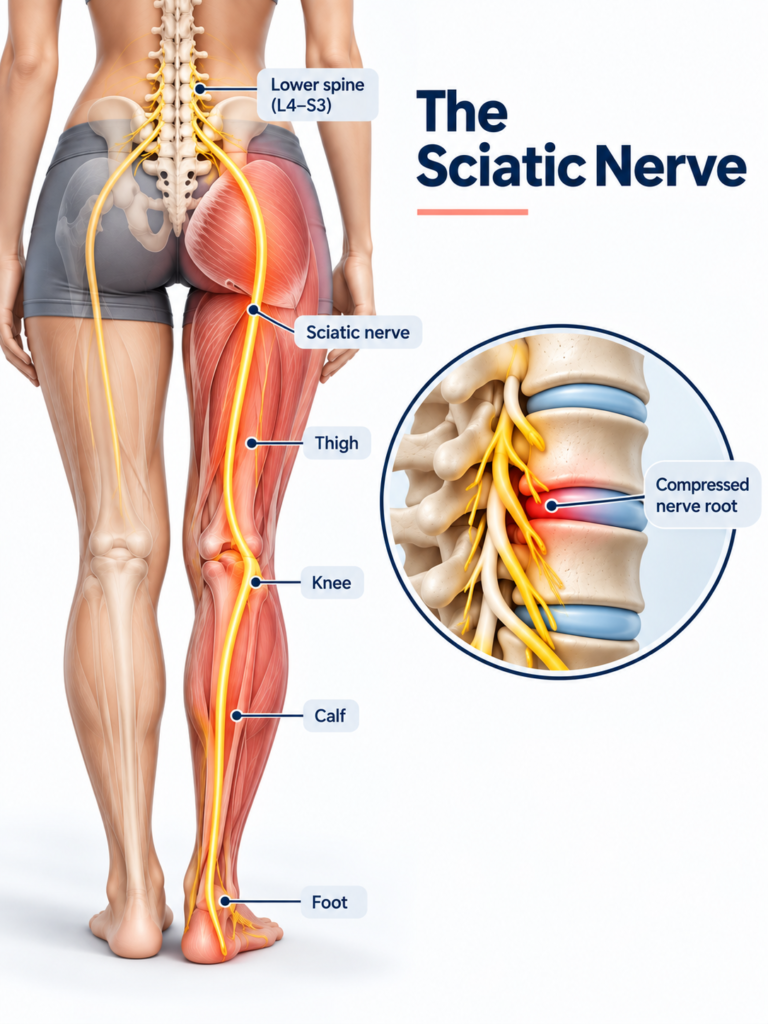
The sciatic nerve is the largest nerve in the body. It is formed by several nerve roots arising from the lower spine and travels through the buttocks and down the back of each leg.
Sciatica refers to pain or other symptoms occurring along this nerve pathway when the nerve or its roots become irritated, compressed or inflamed.
Common sciatica symptoms include:
- Pain in the lower back, buttock or leg
- Burning or shooting pain
- Tingling or pins-and-needles
- Numbness
- Muscle weakness in the leg or foot
Figure 1. Sciatic nerve pathway from the lower spine through the leg.
What Are the Symptoms of Sciatica (Sciatic Nerve Pain)?
Sciatica symptoms can range from mild discomfort to severe, disabling pain.
Shooting or Burning Leg Pain
Pain may travel from the lower back or buttock down the back of the thigh and sometimes into the calf or foot. It may feel sharp, burning, electric-shock-like or shooting and can worsen with sitting, bending, coughing or sneezing.
Numbness and Tingling
Pressure on a nerve can cause numbness or tingling in the buttock, thigh, lower leg or foot.
Muscle Weakness
More significant nerve compression can cause weakness in the affected leg or foot and may affect normal walking or movement.
Lower Back Pain
Lower back pain can occur alongside sciatica, although in some cases leg pain is more noticeable than back pain.
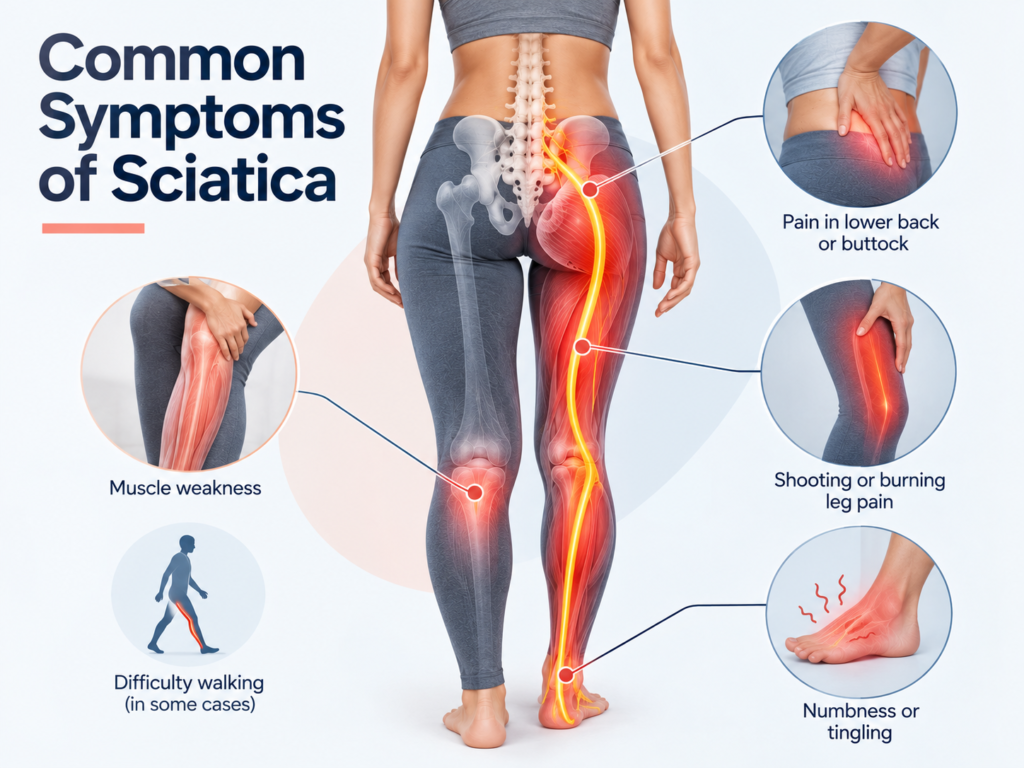
Figure 2. Common symptoms associated with sciatica.
What Causes Sciatica?
Sciatica occurs when the nerve roots that contribute to the sciatic nerve become compressed or irritated.
Herniated Disc
A herniated disc is one of the most common causes. When the outer portion of a spinal disc develops a tear or weakness, inner material can protrude and press against a nearby nerve.
Bone Spurs and Spinal Changes
Age-related spinal changes can produce bone spurs or narrowing around spinal nerves. Spinal stenosis and spondylolisthesis can also contribute to sciatica.
Other Causes
Less commonly, nerve compression may result from tumors or other growths affecting the spine or surrounding structures.
Who Is More Likely to Develop Sciatica?
- Increasing age and age-related spinal changes
- Excess body weight
- Prolonged sitting or inactivity
- Heavy lifting or repetitive bending and twisting
- Poor lifting technique
- Certain spinal conditions
- Diabetes
- Previous back injuries
Regular physical activity and maintaining good core strength can help support the spine and reduce some risk factors.
How Is Sciatica Diagnosed?
A doctor usually begins with a detailed medical history and physical examination. They may assess muscle strength, reflexes, sensation, walking pattern, range of movement and whether certain movements reproduce symptoms.
Imaging is not always required immediately, particularly when symptoms are mild and improving.
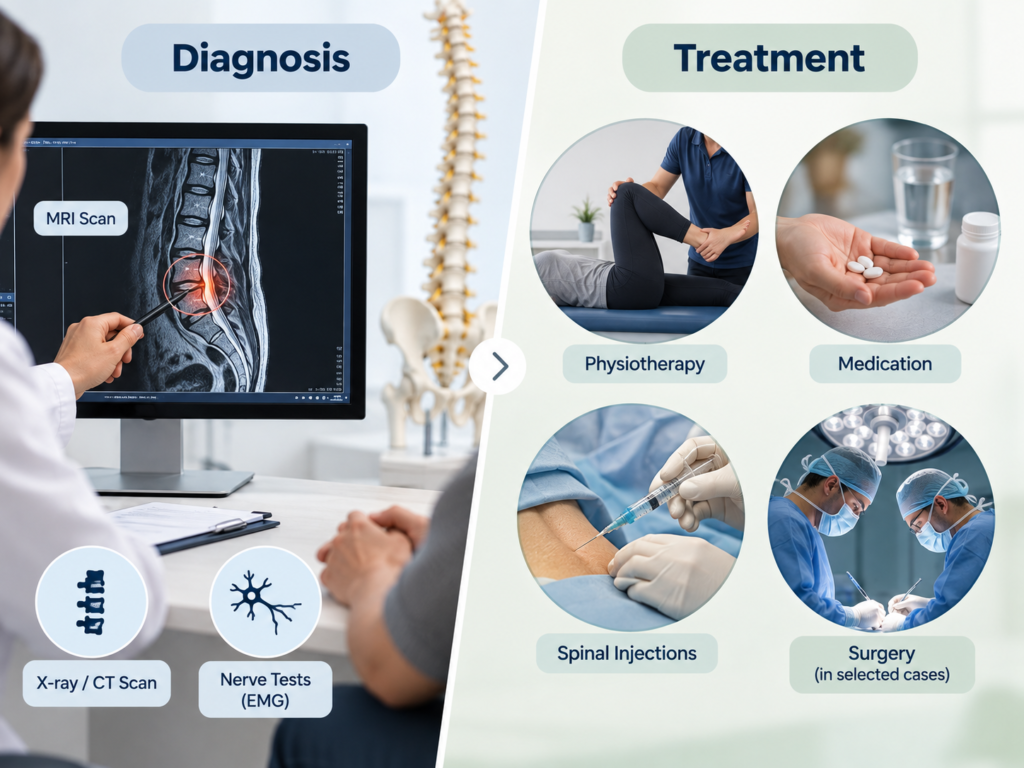
MRI
MRI provides detailed images of the spine, discs, nerves and surrounding soft tissues and can help identify a herniated disc or other causes of nerve compression when clinically indicated.
X-ray or CT Scan
X-rays can identify certain structural changes, while CT scans may provide additional information in selected cases.
EMG and Nerve Tests
When the diagnosis is uncertain or nerve damage needs further evaluation, electromyography or nerve conduction studies may sometimes be recommended.
What Is the Treatment for Sciatica?
Treatment depends on the cause, severity and duration of symptoms.
Medicines and Self-Care
For mild cases, treatment may include appropriate pain-relieving or anti-inflammatory medicines, heat or cold applications and gentle movement. Extended bed rest is generally not recommended. Take medicines only as advised by a doctor.
Physiotherapy
Physical therapy can improve mobility, strength and posture. Exercises may focus on core strength, flexibility, controlled spinal movement and supporting muscles.
Spinal Injections
In selected patients, a corticosteroid injection around the affected nerve may provide temporary pain relief and help facilitate rehabilitation.
Sciatica Surgery
Most people with sciatica do not need surgery. Surgery may be considered when severe symptoms persist despite appropriate non-surgical treatment or when there is significant or progressive nerve weakness or other serious neurological symptoms.
Sciatica Exercises: Are They Safe and Helpful?
Gentle, appropriate movement can be beneficial for many people with it. Once acute pain is controlled, a structured exercise program may improve flexibility, strength and spinal support.
- Gentle stretching
- Bridging exercises
- Cat-cow movements
- Knee-to-chest stretches
- Core-strengthening exercises
Not every exercise is suitable during an acute episode. Stop exercises that significantly worsen pain, numbness or weakness and seek professional guidance when symptoms are significant.
When Does Sciatica Require Surgery?
Sciatica does not automatically mean surgery. Surgery may be considered when:
- Severe leg pain continues despite appropriate conservative treatment
- Symptoms significantly interfere with daily activities
- There is progressive muscle weakness
- There is significant nerve compression
- Bladder or bowel function is affected
- Other non-surgical treatments have not provided adequate relief
The decision depends on the cause of nerve compression, neurological findings, imaging results and overall health.
When Should You See a Doctor?
Consult a doctor if symptoms are severe, persistent, worsening or interfering with daily activities.
- Increasing numbness
- Muscle weakness
- Difficulty walking
- Persistent or worsening leg pain
- Symptoms that do not improve with self-care
Seek Immediate Medical Care If You Have…
Certain symptoms can indicate severe nerve compression and require urgent assessment:
- Numbness around the genitals, anus or inner thighs
- New difficulty starting urination
- Inability to control the bladder or bowel
- Severe or worsening weakness in both legs
- Significant loss of sensation in the legs
These symptoms can occur with cauda equina syndrome, a serious condition requiring urgent treatment.
Frequently Asked Questions About Sciatica
Can sciatica go away on its own?
Yes. Many people improve over several weeks with appropriate self-care and non-surgical treatment. Persistent, severe or worsening symptoms should be evaluated.
Is sciatica always caused by a slipped disc?
No. A herniated or slipped disc is common, but bone spurs, spinal stenosis and other spinal conditions can also compress or irritate the nerves involved in sciatica.
Is walking good for sciatica?
Gentle movement and walking may help many people, while prolonged inactivity can contribute to stiffness and weakness. Activity should be adjusted according to the severity and cause.
Can sciatica affect both legs?
Sciatica usually affects one side. Symptoms in both legs, especially with severe weakness or numbness, bladder or bowel changes, or numbness around the genital or anal area, require urgent evaluation.
Does sciatica always require an MRI?
No. Imaging is not routinely necessary for every case. MRI may be recommended when symptoms are severe, persistent, worsening or an underlying cause needs investigation.
Conclusion
Sciatica can cause intense pain, but most people recover without surgery with appropriate treatment and a gradual return to activity.
Persistent pain, numbness or weakness should not be ignored. Bladder or bowel problems or numbness around the genital area require urgent medical attention.
If you are experiencing recurring or severe sciatic pain, a proper evaluation can help identify the underlying cause and guide the right treatment plan. If you have recurring or severe sciatic pain, book a consultation with Dr. Neha Rai for a proper evaluation.
References
1. Mayo Clinic. Sciatica: Symptoms and causes. Updated December 23, 2025. https://www.mayoclinic.org/diseases-conditions/sciatica/symptoms-causes/syc-20377435
2. Mayo Clinic. Sciatica: Diagnosis and treatment. Updated December 23, 2025. https://www.mayoclinic.org/diseases-conditions/sciatica/diagnosis-treatment/drc-20377441
3. Cleveland Clinic. Sciatica. Medically reviewed, updated February 10, 2026. https://my.clevelandclinic.org/health/diseases/12792-sciatica
4. American Association of Neurological Surgeons. Herniated Disc. https://www.aans.org/patients/conditions-treatments/herniated-disc/
5. NHS. Sciatica. https://www.nhs.uk/conditions/sciatica