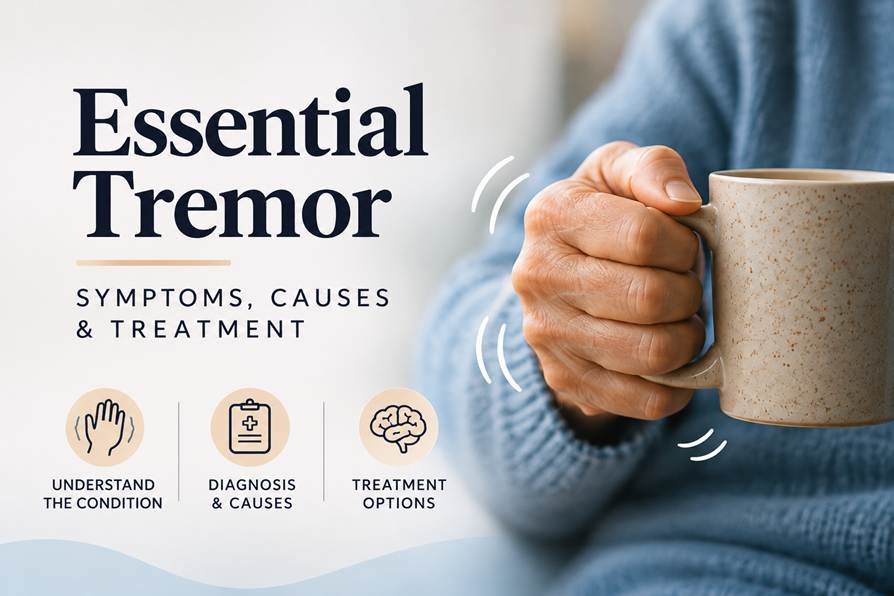
A hand that shakes while holding a cup, signing a document or using a phone can make everyday activities unexpectedly difficult. Sometimes the shaking is dismissed as ageing, nervousness or weakness. However, persistent shaking during movement or while holding a posture may be a sign of essential tremor, a common neurological movement disorder.
Essential tremor most often affects the hands and arms, but it can also involve the head, voice and, less commonly, other parts of the body. The condition is not the same as Parkinson’s disease, and an accurate diagnosis is important because different causes of tremor require different approaches. This article explains essential tremor symptoms, possible causes, diagnosis and available treatment options.
What Is Essential Tremor?
Essential tremor is a neurological condition that causes rhythmic, involuntary shaking. It is usually most noticeable when a person uses their hands or holds them in a position, such as reaching for an object or keeping a glass steady. Experts call this an action or postural tremor.
The tremor commonly affects both hands, although it may begin more noticeably on one side. Some people also experience shaking of the head or a trembling voice. Symptoms can remain mild for years, while in others they gradually become more noticeable and interfere with daily activities. Essential tremor can begin at different ages, but it becomes more common with increasing age.
What Are the Symptoms of Essential Tremor?
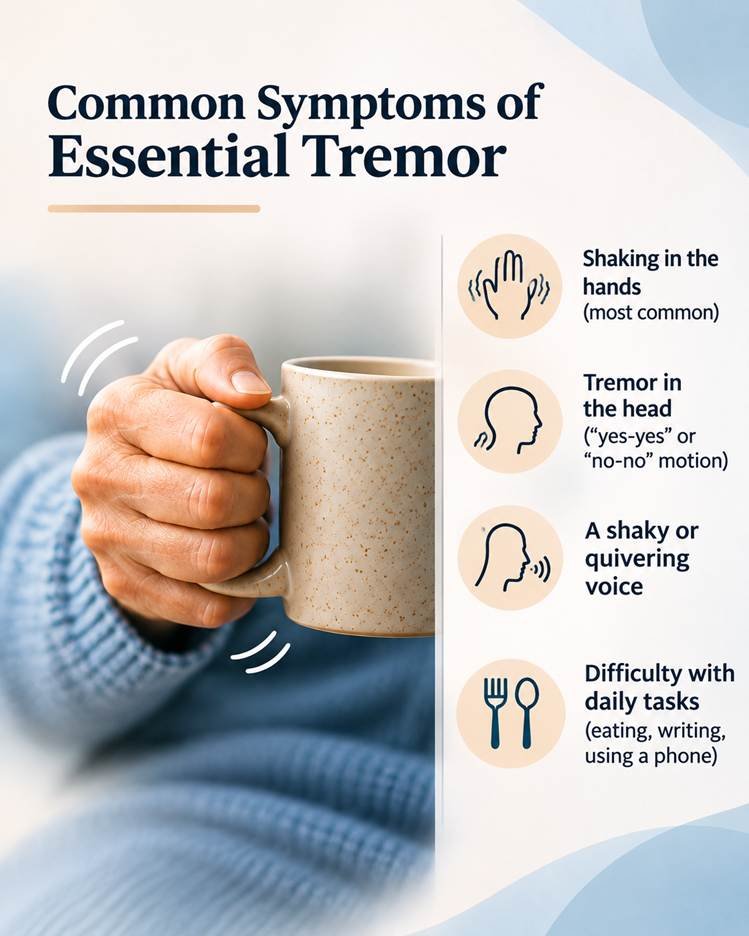
Symptoms vary from person to person. Common features include:
- Shaking in one or both hands, especially while writing, eating, drinking or using tools.
- Difficulty holding a cup, spoon, phone or other small objects steadily.
- The trembling becomes more noticeable when the arms are stretched out or during purposeful movement.
- Head movement that may look like a “yes-yes” or “no-no” motion.
- A shaky or unsteady-sounding voice when the vocal muscles are involved.
- Difficulty with tasks that need fine hand control, such as buttoning clothes, applying makeup or signing documents.
Stress, tiredness, anxiety, caffeine and extreme temperatures can make tremors more noticeable in some people. The presence of shaking alone does not confirm essential tremor. A clinician needs to assess the pattern, timing and other symptoms.
What Causes Essential Tremor?
The exact cause of essential tremor is not fully understood. Research suggests that changes in the brain networks involved in movement coordination may play a role. In many people, the condition appears to run in families. An inherited form is sometimes called familial tremor.
Having a family history can increase the likelihood of developing essential tremor, but not everyone with the condition has an affected relative. Essential tremor is not caused simply by being nervous, and it is not a sign of personal weakness.
Essential Tremor vs Parkinson’s Disease: What Is the Difference?
Both essential tremor and Parkinson’s disease can cause shaking, but they are different conditions. The timing and pattern of the tremor can offer useful clues, although no single feature should be used to make a diagnosis.
| Feature | Essential tremor | Parkinson’s disease |
| When shaking is often noticed | During action or while holding a posture | Often most noticeable at rest, especially early on |
| Common areas | Hands and arms; may involve head or voice | Often starts in a hand; may involve legs, chin or other areas |
| Other features | Tremor is the main feature in many people | May include slowness of movement, stiffness and changes in walking or balance |
These are general patterns, not a home diagnostic test. Some people have overlapping or atypical symptoms. A neurological assessment is needed to distinguish essential tremor from Parkinson’s disease and other causes of shaking.
How Is Essential Tremor Diagnosed?
There is no single blood test or scan that confirms essential tremor. Doctors usually make the diagnosis by reviewing the person’s symptoms and medical history and performing a neurological examination. Doctors verify when the shaking began and which parts of the body are affected. They check if it happens at rest or with activity and whether relatives have similar symptoms.
During the examination, the clinician may ask the person to:
- Hold both arms outstretched.
- Write a sentence or draw a spiral.
- Pick up or drink from a cup.
- Perform simple movements to assess coordination, posture and balance.
Blood tests may be recommended to check for other possible causes, such as thyroid problems or metabolic conditions. The clinician may also review prescribed medicines and supplements because some can cause or worsen tremor. Brain imaging or specialized tests are not needed for every person, but may be considered when the diagnosis is uncertain or another condition is suspected.
Essential Tremor Treatment: What Are the Options?
Treatment depends on how much the tremor affects daily life, the body parts involved, other health conditions and the person’s preferences. People with mild symptoms may not need medication or a procedure. When shaking interferes with work, eating, writing or other activities, a clinician can discuss treatment options.
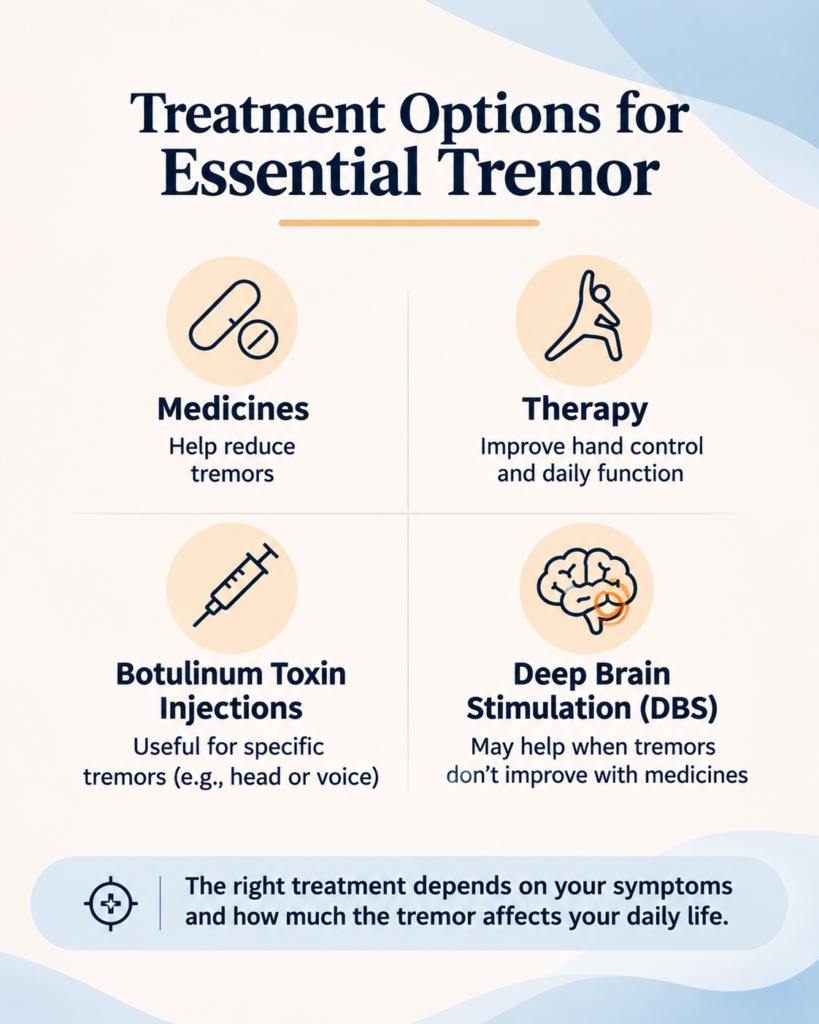
1. Medicines
Medicines can reduce tremor in some people. Propranolol, a beta blocker, and primidone, an anti-seizure medicine, are commonly used options. Other medicines may be considered in selected cases. The choice depends on a person’s medical history, other medicines and potential side effects. For example, propranolol may not be suitable for some people with asthma or certain heart conditions, while primidone can cause drowsiness or nausea.
Do not start, stop or change a tremor medicine without medical advice. The dose and suitability need individual assessment.
2. Occupational and Physical Therapy
Therapy can help people adapt to everyday tasks and maintain independence. An occupational therapist may recommend practical strategies or assistive equipment, such as heavier utensils, cups with lids, wider-grip pens or tools designed to be easier to hold. A physical therapist may work on coordination, strength and safe movement when needed.
3. Botulinum Toxin Injections
Botulinum toxin injections may help selected people, particularly when tremor affects the head or voice. Injections are placed in specific muscles to reduce unwanted muscle activity. The treatment needs careful planning because weakness can occur in the injected muscles. For hand tremor, this may affect grip or finger strength; for voice tremor, it may affect voice quality or swallowing.
4. Deep Brain Stimulation (DBS)
Deep brain stimulation may be considered for people with severe, disabling essential tremor that does not respond adequately to medication. During DBS surgery, a neurosurgeon places thin electrodes in a carefully selected brain target involved in tremor control. The electrodes connect to a pulse generator implanted under the skin, usually near the chest. The device delivers adjustable electrical stimulation to help reduce tremor.
DBS does not cure essential tremor, and it is not suitable for everyone. A specialist team assesses the diagnosis, symptom severity, overall health, goals and potential risks before recommending surgery. Programming and follow-up visits are important parts of treatment. Possible risks include bleeding, infection, device-related problems and changes in speech, balance or coordination.
5. Other Procedural Options
For selected people with medication-resistant tremor, a specialist may discuss lesion-based procedures such as focused ultrasound thalamotomy or radio frequency thalamotomy. These treatments act on a small, precisely selected area involved in tremor pathways. Availability, eligibility, benefits and risks vary by procedure and centre. Unlike DBS, lesion-based procedures create a targeted lesion and are not adjusted in the same way after treatment. A detailed discussion with an experienced specialist is essential.
Can Lifestyle Changes Help Manage Essential Tremor?
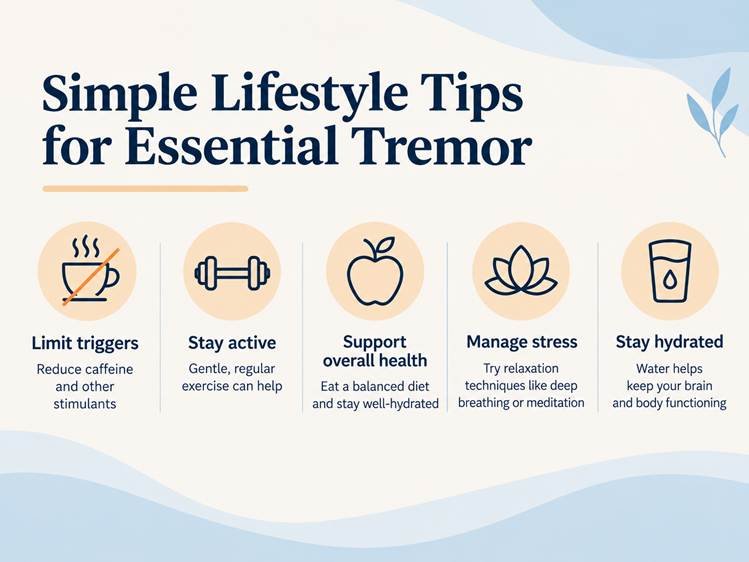
Lifestyle changes do not cure essential tremor, but they may help some people manage triggers and daily challenges. Consider the following practical steps:
- Notice whether caffeine makes your tremor worse and discuss reducing it if needed.
- Prioritize regular sleep, as fatigue can make shaking more noticeable.
- Use relaxation techniques if stress or anxiety worsens your symptoms.
- Try adaptive cups, utensils, writing aids or voice-to-text tools for tasks that have become difficult.
- Keep a record of symptoms, triggers and medicines to discuss at appointments.
Avoid using alcohol as a way to control tremor. Any short-term change is unreliable, and alcohol can cause harm and create additional health risks.
When Should You Consult a Neurosurgeon?
Arrange a medical assessment if:
- Your hands, head or voice shake repeatedly or the tremor is becoming more noticeable.
- Shaking interferes with eating, drinking, writing, dressing, work or other daily activities.
- You have a family history of tremor and are developing similar symptoms.
- You are unsure whether the shaking could be related to Parkinson’s disease, a medicine or another medical condition.
- Medication is not providing enough relief or causes side effects.
Seek urgent medical attention if shaking begins suddenly or occurs with new weakness, facial drooping, difficulty speaking, severe headache, confusion or sudden problems with walking. Do not assume these symptoms are essential tremor; they may indicate a medical emergency.
Frequently Asked Questions About Essential Tremor
Is essential tremor a serious condition?
Essential tremor is not usually life-threatening, but it can become disabling for some people. The impact depends on symptom severity and how much it interferes with daily activities.
Does essential tremor get worse with age?
It may gradually become more noticeable over time, although the rate of change varies. Some people have mild symptoms for many years.
Can essential tremor be cured?
There is currently no established cure. Medicines, therapy and selected procedures can reduce symptoms and improve function for some people.
Is essential tremor the same as Parkinson’s disease?
No. They are different neurological conditions. Essential tremor is often more noticeable during action, while Parkinson’s tremor is often more noticeable at rest. A specialist can assess the pattern and other signs.
Is DBS used for essential tremor?
Yes. DBS may be an option for selected people with severe tremor that remains disabling despite appropriate medication. A specialist team must assess suitability and discuss benefits and risks.
Conclusion
Essential tremor can make simple daily activities challenging, but effective management options are available. The first step is to identify the cause of the shaking and distinguish essential tremor from Parkinson’s disease, medication-related tremor and other conditions. With an accurate diagnosis and an individualized treatment plan, many people can reduce the impact of tremor and maintain their independence. If shaking is affecting your daily life, seek advice from a qualified medical professional.
Medical Disclaimer
This article is for general educational purposes only and is not a substitute for individual medical advice, diagnosis or treatment. Symptoms and treatment suitability vary from person to person. Please consult a qualified neurologist or neurosurgical team to discuss your condition and treatment options.
References
- Mayo Clinic. Essential tremor: Symptoms and causes. https://www.mayoclinic.org/diseases-conditions/essential-tremor/symptoms-causes/syc-20350534
- Mayo Clinic. Essential tremor: Diagnosis and treatment. https://www.mayoclinic.org/diseases-conditions/essential-tremor/diagnosis-treatment/drc-20350539
- National Institute of Neurological Disorders and Stroke (NINDS). Tremor. https://www.ninds.nih.gov/publications/tremor
- NHS. Tremor or shaking hands. https://www.nhs.uk/symptoms/tremor-or-shaking-hands/
- MedlinePlus. Tremor. https://medlineplus.gov/tremor.html
- National Institute for Health and Care Excellence (NICE). Suspected neurological conditions: recognition and referral. https://www.nice.org.uk/guidance/ng127/chapter/Recommendations-for-adults-aged-over-16