A seizure can be frightening to witness. A person may suddenly stare, become unresponsive, experience unusual sensations or lose control of their movements. Although one seizure does not automatically mean someone has epilepsy, repeated seizures without a temporary, reversible cause may point to this neurological condition.
Epilepsy affects the brain and causes a tendency to have recurrent seizures. During a seizure, groups of brain cells produce sudden bursts of abnormal electrical activity. Seizures can look very different from one person to another. Some involve whole-body stiffening and jerking, while others cause brief changes in awareness, movement, emotion or sensation.
Understanding epilepsy helps families recognize symptoms, respond safely and seek appropriate care. This guide explains epilepsy symptoms, seizure types, possible causes, diagnosis, treatment options and seizure first aid.
What Is Epilepsy?
Epilepsy is a neurological disorder characterized by an enduring tendency to experience unprovoked seizures. Clinicians commonly diagnose epilepsy after two unprovoked seizures more than 24 hours apart. They may also diagnose it after one unprovoked seizure when tests show a high risk of another seizure, or when they identify a recognised epilepsy syndrome.
A seizure is a single event. Epilepsy is the condition that creates an ongoing tendency to have seizures. Seizures can also happen for other reasons, such as very low blood sugar, certain infections, head injury, or alcohol or drug withdrawal. A seizure caused by a temporary medical problem does not necessarily mean the person has epilepsy.
Epilepsy can affect people of any age. Some people experience seizures only occasionally, while others need ongoing treatment and support. With an accurate diagnosis and an appropriate care plan, many people with epilepsy can manage their seizures and lead active lives.
What Are the Symptoms of Epilepsy?
Epilepsy symptoms depend on which brain networks take part in the seizure. A seizure may affect movement, awareness, sensation, emotions or behavior. Common signs include:
- Staring spells or brief periods of unresponsiveness.
- Sudden confusion or difficulty responding.
- Repeated jerking, twitching or stiffening of the arms, legs or face.
- Sudden loss of muscle tone, which may cause a person to fall.
- Unusual sensations, such as tingling, a strange smell or taste, déjà vu, or a rising feeling in the stomach.
- Temporary changes in vision, hearing, speech or emotions.
- Loss of awareness, sometimes followed by confusion, tiredness, headache or muscle soreness.
Not every seizure causes shaking or a loss of consciousness. Some seizures last only a few seconds and may look like daydreaming. Others cause a person to fall and experience rhythmic jerking. Some people notice an aura, which is actually the beginning of a focal seizure and may involve a warning sensation or unusual feeling.
What Are the Different Types of Seizures?
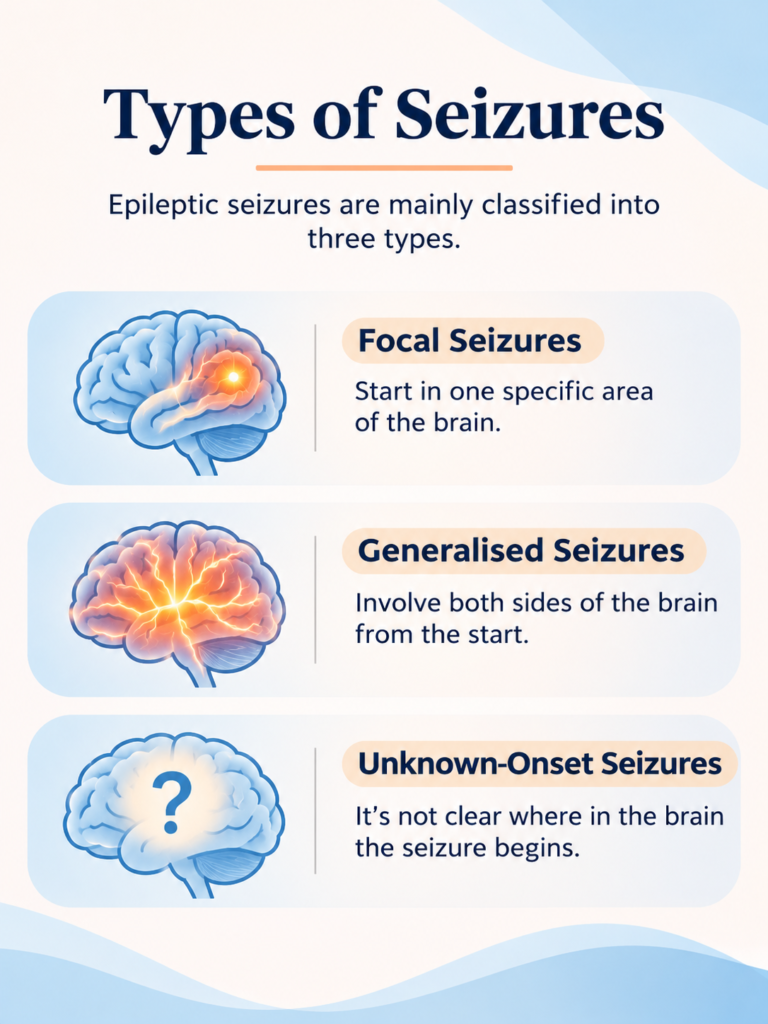
Doctors classify seizures by where they begin in the brain and how they affect awareness and movement. The main groups are focal-onset seizures, generalized-onset seizures and seizures of unknown onset.
1. Focal-Onset Seizures
Focal seizures start in networks on one side of the brain. A person may remain aware or experience impaired awareness. Symptoms depend on the brain area involved. The person might notice unusual sensations, repetitive movements, sudden fear, a strange smell or a brief period of confusion. Some focal seizures spread to both sides of the brain and develop into a bilateral tonic-clonic seizure.
2. Generalized-Onset Seizures
Generalized seizures involve networks on both sides of the brain from the beginning. Common types include:
- Absence seizures: Brief pauses in awareness, often with staring. They occur more commonly in children and may happen many times a day.
- Tonic-clonic seizures: Loss of consciousness with body stiffening (tonic phase) followed by rhythmic jerking (clonic phase). A person may feel tired or confused afterwards.
- Myoclonic seizures: Brief, shock-like muscle jerks, often affecting the arms or upper body.
- Atonic seizures: Sudden loss of muscle tone that may cause the person to drop their head or fall.
- Tonic seizures: Sudden muscle stiffening, which can cause a fall.
- Clonic seizures: Repeated rhythmic jerking movements.
The seizure type helps guide treatment, so a clinician needs a clear description of what happened. If it is safe, a witness can note the start time, movements, awareness and recovery, or record a short video for the treating clinician.
3. Seizures of Unknown Onset
Sometimes no one sees the beginning of a seizure, or available tests do not show where it started. Clinicians may classify it as unknown onset until they gather more information.
What Causes Epilepsy?
In many people, doctors cannot identify one definite cause. When they can identify a cause, it usually falls into one of several groups:
- Structural causes: Brain injuries, stroke, brain tumors, congenital brain differences or scars from earlier damage.
- Genetic causes: Changes in genes can increase the likelihood of seizures. Some genetic epilepsies run in families, while others arise for the first time in a person.
- Infectious causes: Certain infections that affect the brain, such as meningitis or encephalitis, can lead to epilepsy.
- Metabolic causes: Problems with the body’s chemical processes can contribute to some epilepsy syndromes.
- Immune-related causes: In some cases, the immune system mistakenly attacks brain tissue and triggers seizures.
- Unknown causes: Despite investigations, the cause remains unclear for many people.
Lack of sleep, missed anti-seizure medication, illness, stress, alcohol and flashing lights can trigger seizures in some people with epilepsy. These factors do not necessarily cause epilepsy itself. Triggers vary from person to person.
How Is Epilepsy Diagnosed?
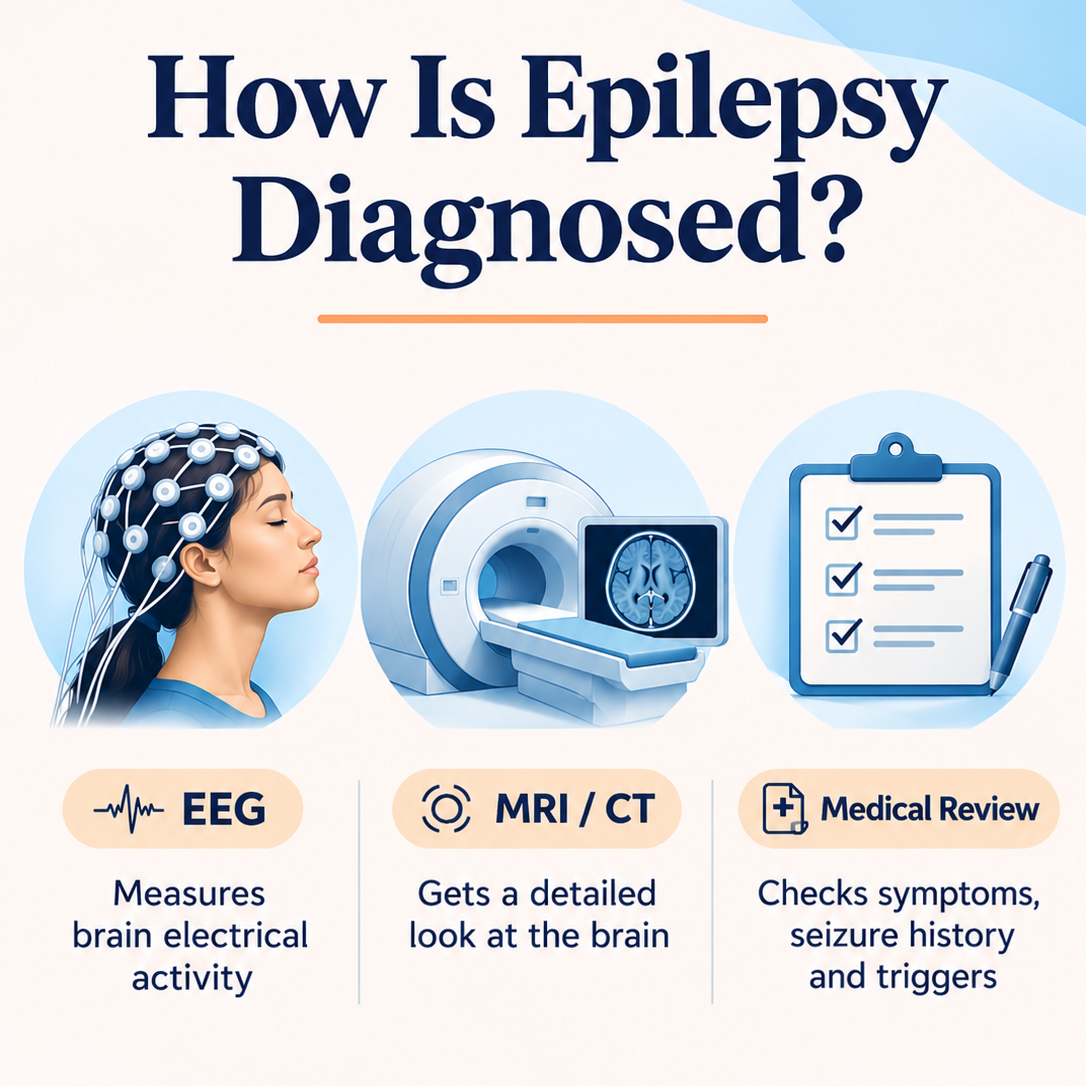
A careful diagnosis helps the doctor identify the seizure type, look for an underlying cause and choose appropriate treatment. The evaluation usually starts with a detailed medical history and a neurological examination.
The doctor may ask the person and witnesses to describe what happened before, during and after the event. Details such as duration, movements, awareness, possible triggers and recovery can help distinguish epileptic seizures from fainting, sleep disorders, migraine and other conditions.
Tests That May Help
- Electroencephalogram (EEG): Records electrical activity in the brain. It can show patterns that support an epilepsy diagnosis, although a normal EEG does not rule out epilepsy.
- Brain MRI: Provides detailed images that may reveal structural changes, scars, tumors or other abnormalities linked to seizures.
- CT scan: May help identify certain urgent structural problems, particularly after an injury or during an emergency assessment.
- Blood tests: Can check for metabolic problems, infection or other conditions that may cause or contribute to seizures.
- Video EEG monitoring: Records behavior and brain activity together, sometimes over an extended period, to help classify events when the diagnosis remains uncertain.
No single test confirms every case of epilepsy. The doctor combines the history, examination and test results to reach a diagnosis. Some people need additional tests at a specialist epilepsy centre.
Epilepsy Treatment: What Are the Options?
Treatment aims to prevent seizures while minimizing side effects and supporting quality of life. The right approach depends on the seizure type, epilepsy syndrome, age, other health conditions, pregnancy considerations and personal circumstances.
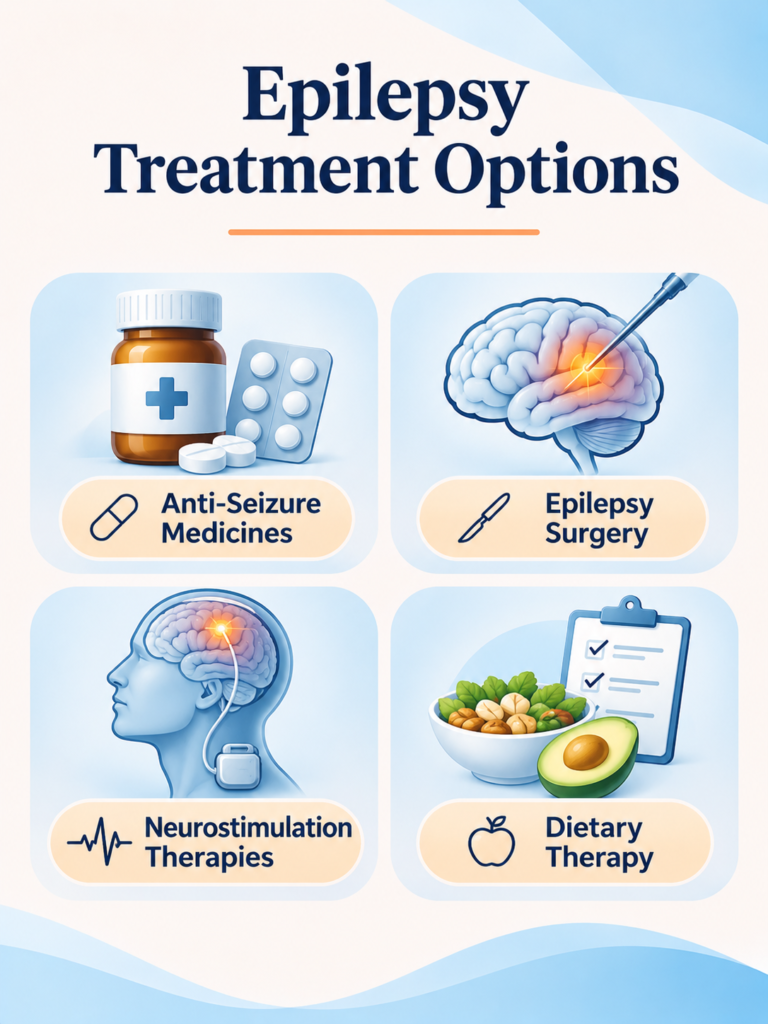
1. Anti-Seizure Medicines
Anti-seizure medicines are the main treatment for many people with epilepsy. The doctor selects a medicine based on the seizure type and the person’s individual needs. Some people control their seizures with one medicine, while others need a combination.
Take medication exactly as prescribed. Missing doses or stopping treatment suddenly can trigger seizures and may cause serious complications. If side effects occur, speak with the treating doctor rather than changing the dose independently. Some medicines can interact with contraception or other prescriptions. People who are pregnant or planning pregnancy should discuss treatment with their specialist.
2. Epilepsy Surgery
Doctors may consider epilepsy surgery when seizures continue despite trials of appropriate anti-seizure medicines. This situation is known as drug-resistant epilepsy. A specialist team first carries out detailed tests to identify where seizures begin and whether surgeons can safely treat that area without causing unacceptable problems with speech, movement, memory or other functions.
Depending on the person’s condition, surgery may remove or disconnect a small area of brain tissue where seizures start. Other procedures may reduce the spread or impact of seizures. Surgery does not suit everyone, and the team must carefully weigh possible benefits against risks.
3. Neurostimulation Treatments
Some people who are not suitable for resective surgery may benefit from a device-based treatment. Options can include vagus nerve stimulation (VNS), responsive neurostimulation (RNS) or deep brain stimulation (DBS) in selected cases and specialist settings. These devices deliver electrical stimulation to influence seizure networks. They may reduce seizure frequency, but they do not guarantee complete seizure control and do not replace specialist follow-up.
4. Dietary Therapy
A ketogenic diet and related medically supervised dietary therapies can help some people, particularly children with certain difficult-to-treat epilepsy syndromes. These diets require guidance from an epilepsy team and a dietitian because they can cause side effects and need nutritional monitoring. Do not start a restrictive diet without medical supervision.
What Should You Do When Someone Has a Seizure?
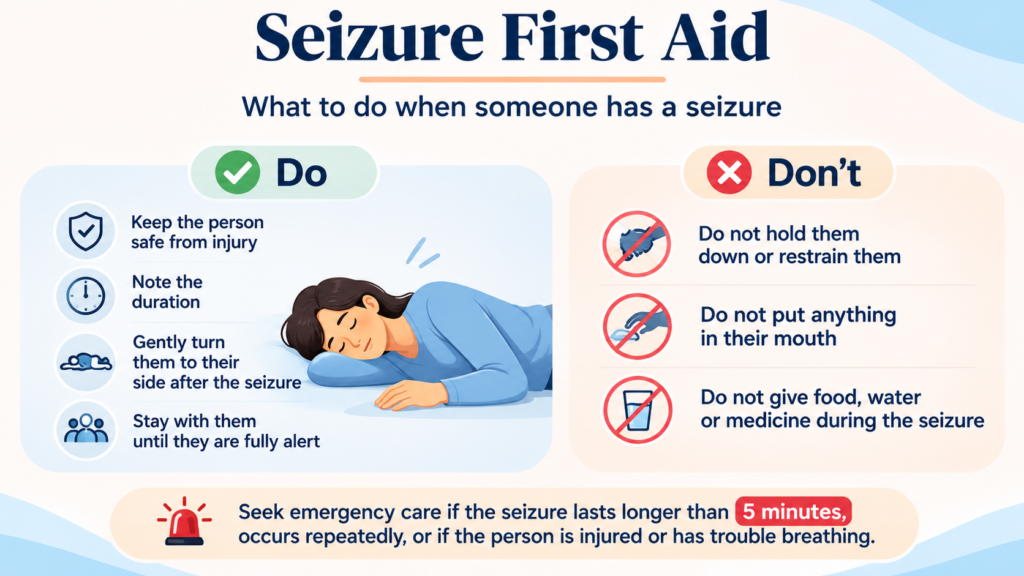
Knowing seizure first aid can prevent injury and help the person recover safely. Stay calm, note the time and follow these steps if someone has a convulsive seizure:
- Stay with the person and track how long the seizure lasts.
- Move nearby sharp, hard or hot objects away to reduce the risk of injury.
- If possible, gently guide the person to the floor and place something soft under their head.
- Loosen tight clothing around the neck and remove glasses.
- When the jerking stops, turn the person onto their side to help keep the airway clear, if you can do so safely.
- Stay with them until they become alert and recover. Speak calmly and explain what happened.
What Should You Not Do?
- Do not hold the person down or try to stop their movements.
- Do not put fingers, a spoon, cloth, water or any other object in their mouth. A person cannot swallow their tongue.
- Do not give food, water or oral medication until the person is fully alert.
- Do not attempt mouth-to-mouth breathing during the seizure. Check breathing after the movements stop and seek emergency help if normal breathing does not return.
When Is a Seizure an Emergency?
Call emergency services if:
- The seizure lasts 5 minutes or longer.
- Another seizure starts before the person regains consciousness.
- The person has trouble breathing or does not wake up as expected after the seizure.
- The person gets injured, has a seizure in water, or the event occurs during pregnancy.
- It is the person’s first known seizure, or you are unsure how to help.
Follow any seizure action plan the person carries. Some people with epilepsy have prescribed rescue medication for prolonged seizures. Only someone trained to use it should give it, according to the individual plan.
Living With Epilepsy: Everyday Safety and Support
Epilepsy affects more than seizure activity. It can influence education, work, driving, emotional well being and family life. A practical care plan can help people stay safer and feel more confident.
- Take medication consistently and use reminders or a pill organizer if helpful.
- Keep regular appointments and discuss any change in seizure pattern or side effects.
- Prioritize sleep and learn which personal triggers may increase seizure risk.
- Make bathing and swimming safer. Prefer showers over baths when appropriate, avoid swimming alone and tell a companion how to respond.
- Discuss driving rules with your doctor and follow the legal requirements where you live. Driving restrictions vary by location and seizure history.
- Share a seizure first-aid plan with family, friends, teachers or colleagues when appropriate.
- Seek support for anxiety, low mood, memory concerns or the social impact of epilepsy.
People with epilepsy can study, work, exercise, travel and build fulfilling lives. The right precautions depend on seizure control and the activities involved. A healthcare professional can help tailor safety advice rather than asking everyone to avoid the same activities.
Epilepsy in Children
Epilepsy can begin during childhood, and seizures may affect learning, attention, behavior and development. Some children have brief staring episodes that adults mistake for daydreaming. Others may experience falls, jerking movements or unusual episodes of confusion.
If a child has repeated episodes of unresponsiveness, unexplained movements or unusual spells, arrange a medical assessment. Early diagnosis helps the care team identify the seizure type and choose suitable treatment. Parents and teachers can support the child by understanding the seizure action plan and communicating with the treating team.
When Should You Consult a Neurologist?
Seek medical advice if you or someone in your family experiences a first seizure, repeated unexplained episodes of staring or unresponsiveness, sudden jerking movements, or unusual spells that keep recurring. People already diagnosed with epilepsy should contact their treating clinician if seizures become more frequent, change in character, cause injury or continue despite medication.
A first seizure needs prompt medical assessment, even if the person feels normal afterwards. Call emergency services for prolonged seizures, repeated seizures without recovery, breathing difficulty or serious injury.
Frequently Asked Questions About Epilepsy
Does one seizure mean a person has epilepsy?
No. A single seizure does not automatically mean epilepsy. Seizures can occur because of temporary medical problems. A clinician assesses the circumstances and recurrence risk before making a diagnosis.
Can epilepsy be cured?
Some people achieve long-term seizure freedom, and certain children may outgrow particular epilepsy syndromes. Others need ongoing treatment. The outlook depends on the epilepsy type, cause and response to treatment.
Can a person with epilepsy live a normal life?
Many people with epilepsy study, work, travel, exercise and enjoy family life. They may need medication, follow-up and practical safety measures based on their seizure pattern.
Is epilepsy contagious?
No. Epilepsy is not contagious and cannot spread from one person to another.
Can stress cause seizures?
Stress may trigger seizures in some people who already have epilepsy, but it is not the sole cause of epilepsy. Triggers differ between individuals.
Can someone die from an epileptic seizure?
Most seizures end on their own, but prolonged seizures and certain complications can be life-threatening. A seizure lasting 5 minutes or longer, repeated seizures without recovery, or breathing problems require emergency help. SUDEP, or sudden unexpected death in epilepsy, is rare but important to discuss with a treating specialist, especially when seizures remain uncontrolled.
Conclusion
Epilepsy is a neurological condition that often responds to treatment, although each person’s experience and response differ. Recognizing seizure symptoms, understanding seizure first aid and seeking an accurate diagnosis can make a meaningful difference. Medicines help many people achieve seizure control, while surgery, neurostimulation and dietary therapies may help selected people whose seizures remain difficult to manage. If you notice repeated unexplained episodes or experience a seizure, consult a qualified medical professional and follow an individualized care plan.
Medical Disclaimer
This article is for general educational purposes only and is not a substitute for individual medical advice, diagnosis or treatment. Seizure symptoms, causes and treatment options vary from person to person. If someone has a first seizure, prolonged seizure or breathing difficulty, seek urgent medical care. Please consult a qualified neurologist or neurosurgical team to discuss your condition and treatment options.
References
- National Institute of Neurological Disorders and Stroke (NINDS). Epilepsy and Seizures. https://www.ninds.nih.gov/health-information/disorders/epilepsy-and-seizures
- Mayo Clinic. Epilepsy: Symptoms and causes. https://www.mayoclinic.org/diseases-conditions/epilepsy/symptoms-causes/syc-20350093
- Centers for Disease Control and Prevention (CDC). Epilepsy. https://www.cdc.gov/epilepsy/index.html
- MedlinePlus. Epilepsy. https://medlineplus.gov/epilepsy.html
- Epilepsy Foundation. Seizure First Aid. https://www.epilepsy.com/recognition/seizure-first-aid